

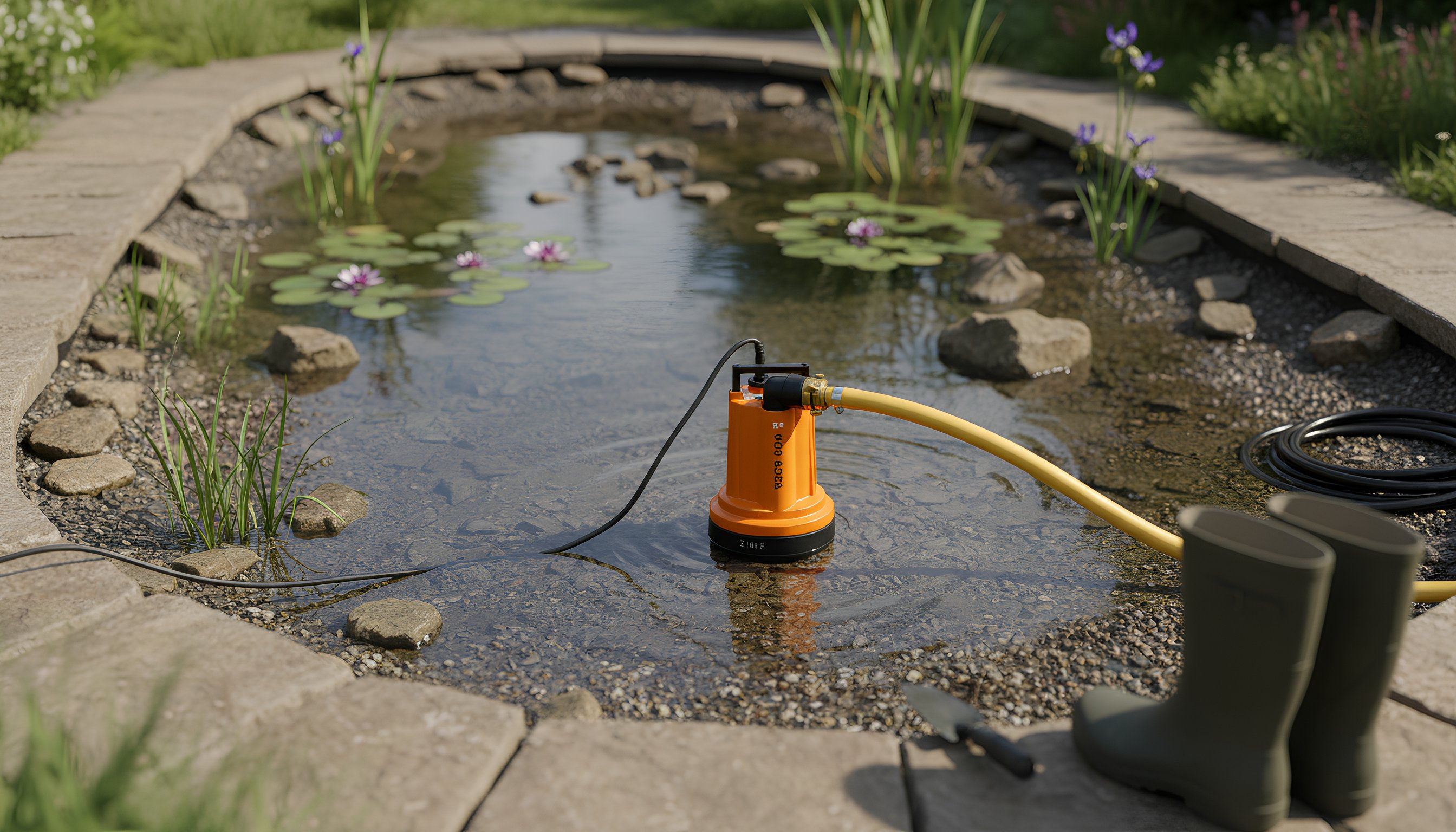
Are you facing a flooded basement, a full pond, or a pool that needs winterizing, but don't know which equipment will do the job? Choosing the right submersible pump is essential for preventing water damage and working efficiently.
The Basics: What is a Submersible Pump and How Does it Work?
A submersible pump is a water pump that, as the name suggests, is completely submerged in the fluid it is moving. Unlike pumps that are placed on dry land, a submersible pump draws in water directly through a suction grille at the bottom. The water is then conveyed through the pump housing to the discharge port, which is connected to a discharge hose.
The main advantage of this type of pump is its simplicity. You place the pump in the water, plug it in, and it does the work. However, there are significant differences in technology and power output. For more basic information, please visit Buying a Submersible Pump? The Ultimate Guide for 2026 .
Clean Water vs. Waste Water: The Most Important Choice
The first question you should ask yourself is: what kind of water will I be pumping? This determines the type of impeller (the rotating part of the pump) you need.
Clean water submersible pump
A clean water pump is designed for liquids without large dirt particles. Think of tap water, rainwater in a barrel, or swimming pool water. These pumps can often pump mop-dry to a very low level. This is also called a flat suction pump.
Dirty water submersible pump
Do you need to pump out a construction pit, a pond full of sludge, or move water with leaves? Then you need a sewage pump. These devices have a larger passage, preventing stones and organic matter from blocking the pump. In the article "Submersible pump for dirty water vs. clean water: What are the differences?", we delve deeper into these technical specifications.

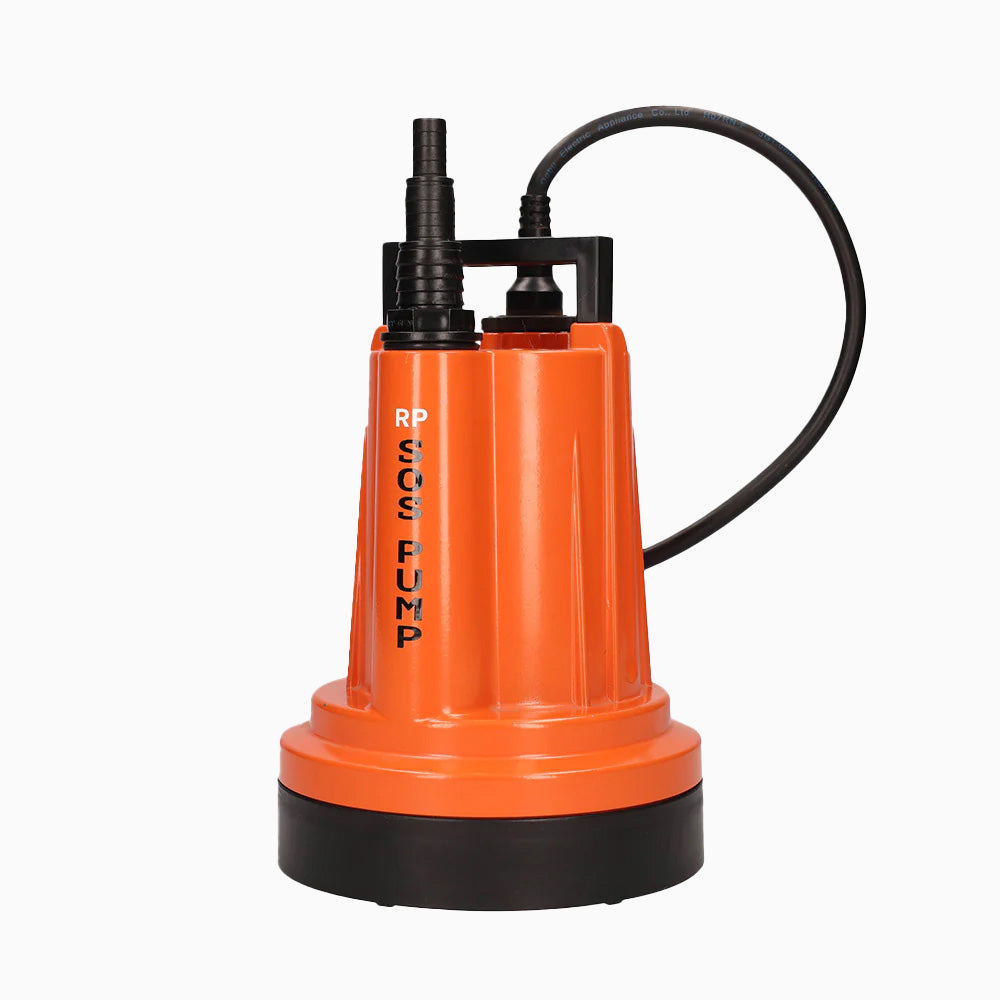
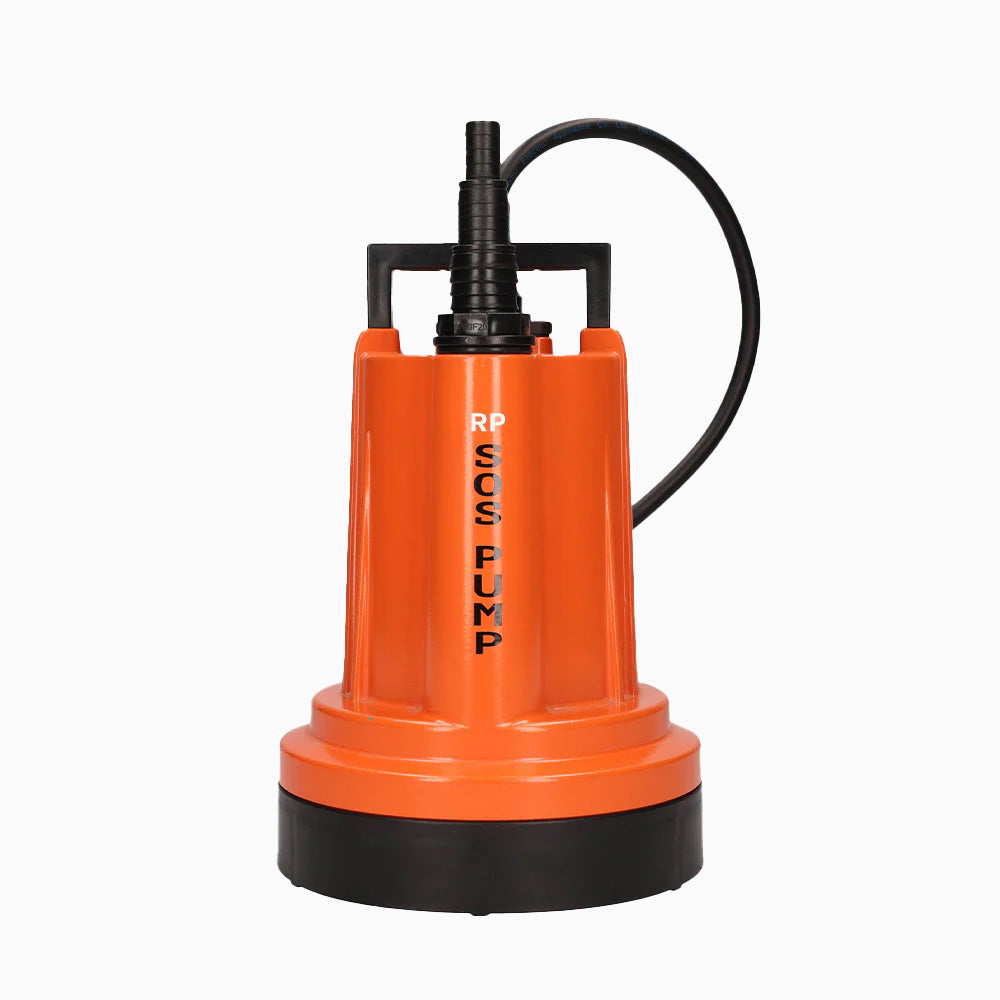
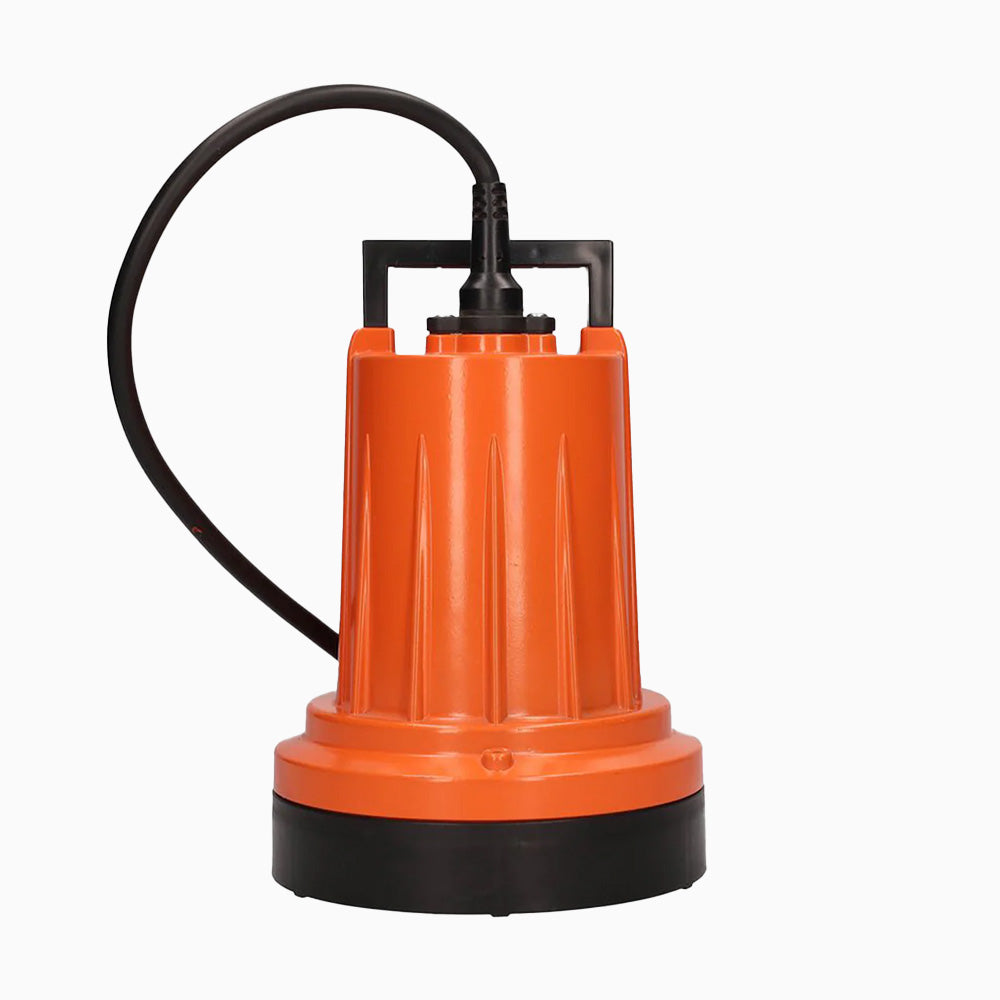
Flat suction submersible pump
Calculate capacity: How many liters per hour do you need?
A common mistake is underestimating the required capacity. A submersible pump's capacity is expressed in liters per hour (l/h) or cubic meters per hour (m3/h). To make the right choice, you need to consider two factors: the volume of water and the head.
Step-by-step plan to determine capacity:
- Determining volume: Calculate the volume of the space (length x width x height). A 10m² cellar with 20cm of water contains 2,000 liters.
- Timeframe: How quickly does the water need to be drained? A 5,000 l/h pump can complete the above task in less than half an hour.
- Head: The higher the water has to be pumped (for example, from a deep cellar to a window at street level), the lower the final output of the pump.
For a detailed calculation, read How do you calculate the required capacity (m3/hour) of a submersible pump? .
Specific applications and float systems
Besides the type of water, the way the pump is turned on is crucial. Most pumps operate with a float switch. This is a switch that activates the pump as soon as the water level rises.
- Floating Float: Ideal for large spaces, but needs room to float.
- Internal Float or Sensor: Perfect for narrow wells where a floating float would get stuck.
If you're dealing with a critical area like a basement, a submersible pump with a precise sensor is often the best choice. This prevents a layer of water from remaining and potentially causing damage. Also check out The best submersible pumps for a flooded basement .

Non-return valve 25mm
Installation and maintenance for a long lifespan
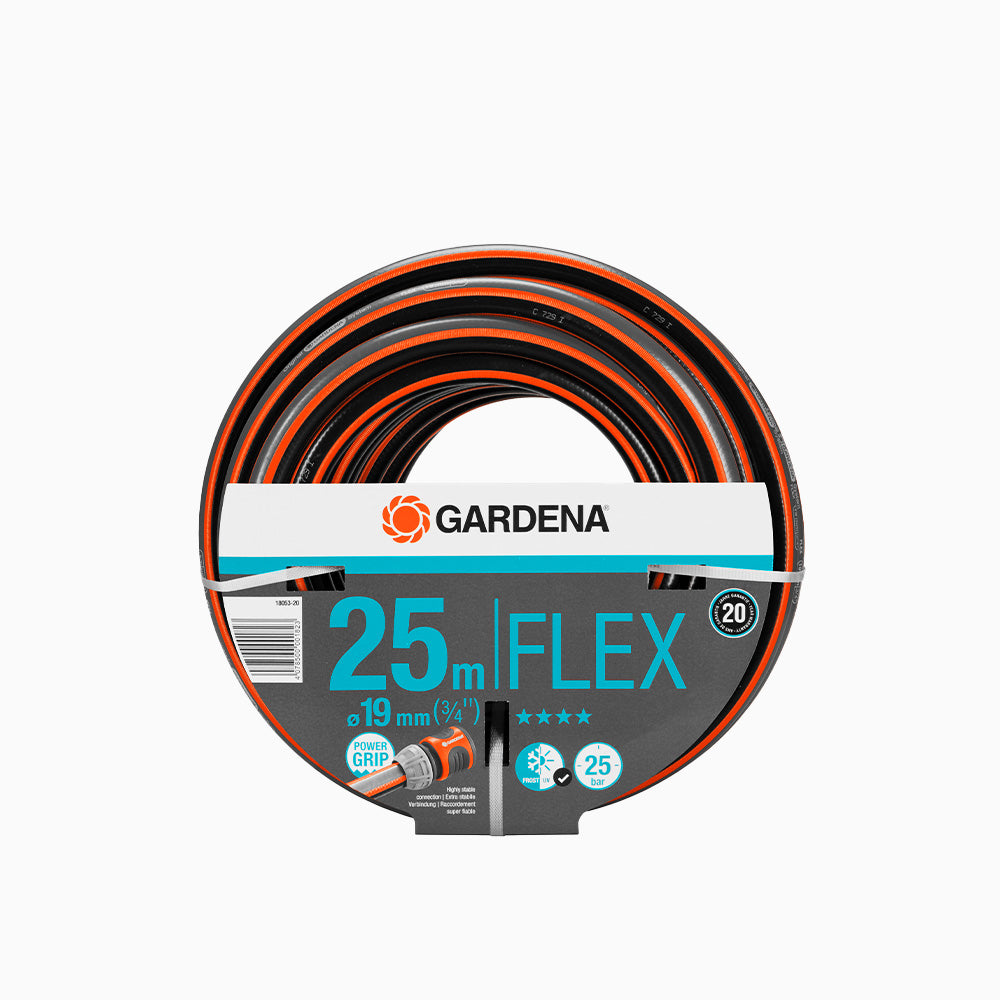
A submersible pump is an investment that can last for years, provided you take good care of it. When installing, always ensure a solid foundation so the pump doesn't suck in mud from the bottom. Also, use the correct diameter discharge hose; a hose that's too thin will create resistance and significantly reduce the pump's capacity.
After use in dirty water, it's wise to rinse the pump with clean water. More tips can be found in "Submersible Pump Maintenance: How to Prevent Limescale and Clogs" and " Submersible Pump Installation and Maintenance: Tips for a Long Life ."
Frequently asked questions about submersible pumps
Can a submersible pump run dry?
No, most submersible pumps are cooled by the water they're in. Dry running can overheat the motor and damage the seals. Therefore, always use a float switch or sensor.
How deep can a submersible pump be in the water?
This depends on the pump's maximum submersion depth, usually indicated in the specifications (often 5 to 7 meters). Also note the length of the power cord.
What is the difference between a flat suction pump and a regular submersible pump?
A standard submersible pump often leaves several centimeters of water. A flat-suction vacuum can pump away water down to a residual level of just 1 or 2 millimeters, leaving the floor perfectly dry.
Share:
Submersible pump not starting: Causes and solutions
Buying a Submersible Pump? The Ultimate Guide for 2026