

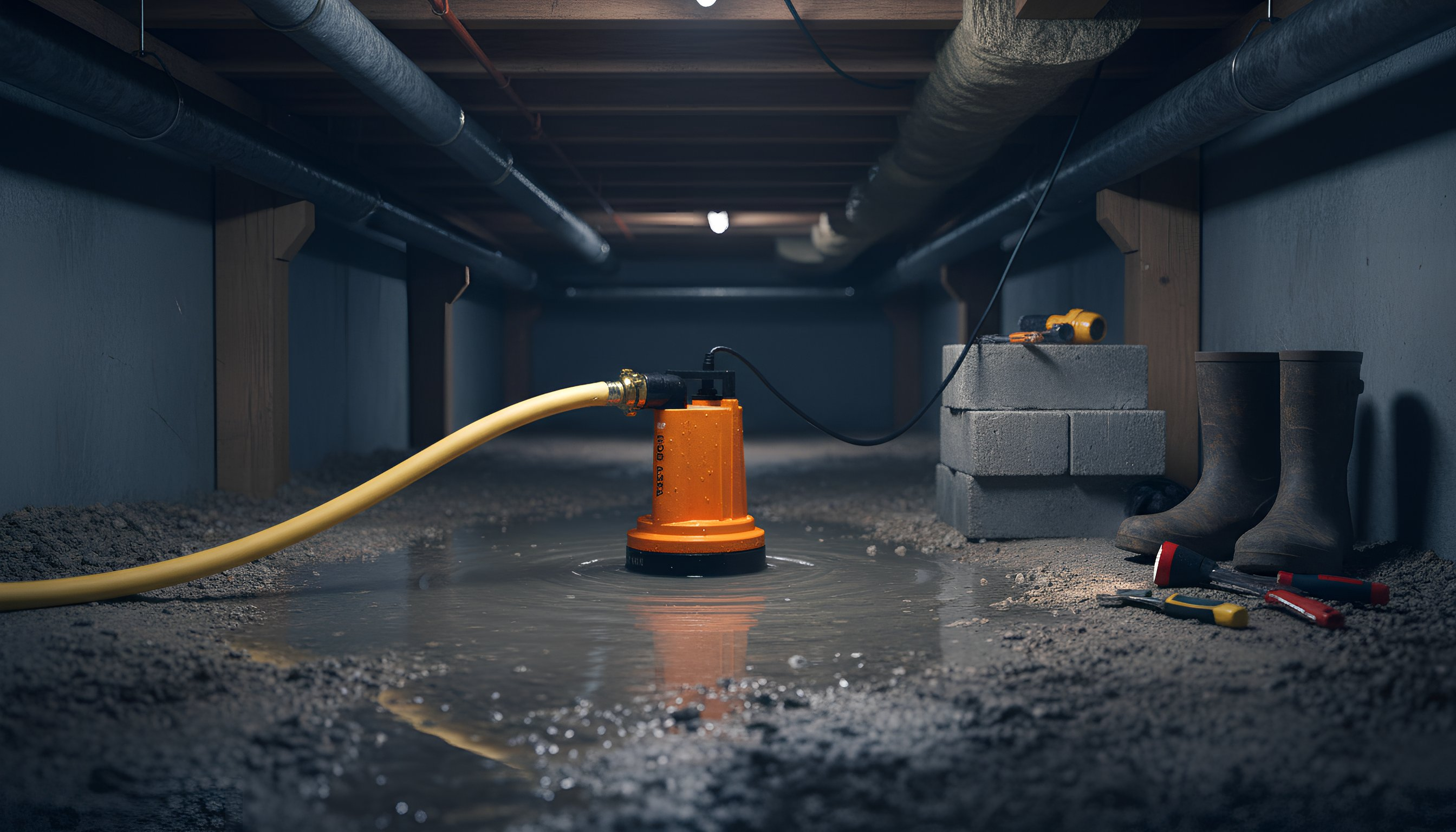
Are you experiencing water under your home or a constantly damp floor? Crawlspace flooding is a common problem that's not only harmful to your home, but also to your health and energy bill.
What exactly is flooding in the crawl space?
Crawlspace flooding occurs when the space beneath the ground floor becomes saturated with water. In the Netherlands, where we often encounter high groundwater levels and clay or peat soils, this is a common phenomenon. Although a crawlspace can naturally have somewhat higher humidity, it's considered a nuisance when puddles remain or when the walls and floors are constantly wet.
Ignoring this problem can lead to serious structural damage. Wooden beams can rot, concrete decay can accelerate, and insulation loses its effectiveness. Moreover, a damp crawl space is an ideal breeding ground for mold and vermin. For more insight into the underlying causes, also read our article " Causes and Consequences of a Wet Crawl Space ."
The main causes of water in the crawl space
To effectively address water damage in the crawl space, you first need to determine the source of the water. There are roughly three main causes:
1. High groundwater level
This is the most common cause. The groundwater level rises, especially during the winter months or after periods of heavy rainfall. If the floor of your crawl space is lower than the water table, water will seep in through the floor or walls. You can read more about this in " Water in the crawl space after heavy rainfall: Immediate action points ."
2. Leaks
A broken sewer line or a leaking water pipe running through the crawl space can cause significant flooding without you noticing. Because we don't check the crawl space daily, such a leak can persist for months before it's noticed by a musty odor or an extremely high water bill.
3. Poor ventilation and condensation
When warm air in the crawl space cools against the cold walls or underside of the floor, condensation forms. Without proper ventilation, this moisture has nowhere to escape, causing the space to remain permanently damp. This process is often exacerbated by " Tackling rising damp from the crawl space ."
Risks of a wet crawl space
Flooding is more than just an unpleasant thought; it poses real risks to your living comfort and the value of your home.
- Health problems: Mold spreads spores that enter the home through cracks in the floor. This can lead to respiratory problems and allergies. See also " Recognizing mold in the home due to a wet crawl space ."
- High energy costs: A damp floor feels colder. This means you have to turn up the heat to keep it comfortable inside.
- Structural damage: Moisture is the enemy of building materials. Metal pipes corrode, and wooden floor joists lose their load-bearing capacity due to wood rot.
- Pests: Mosquitoes, silverfish, and even rats love damp, dark spaces.
Direct Solutions: Remove the Water
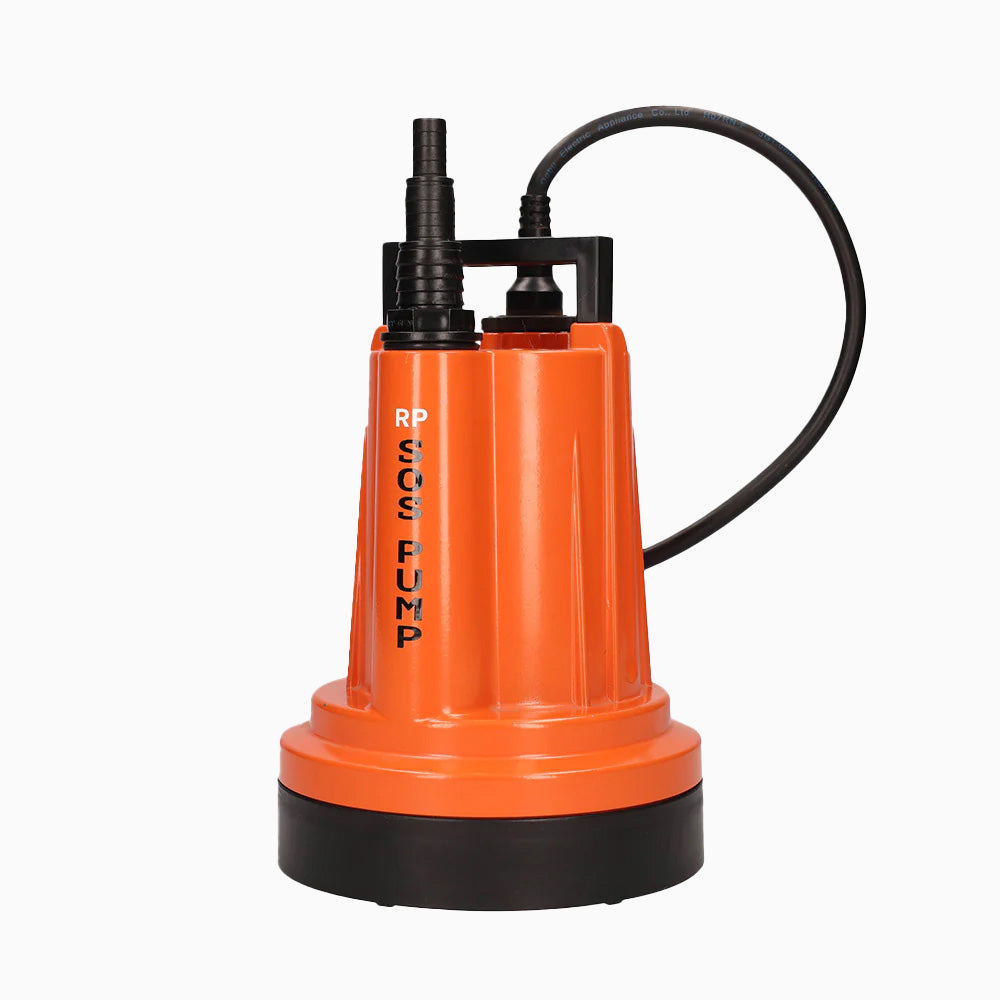
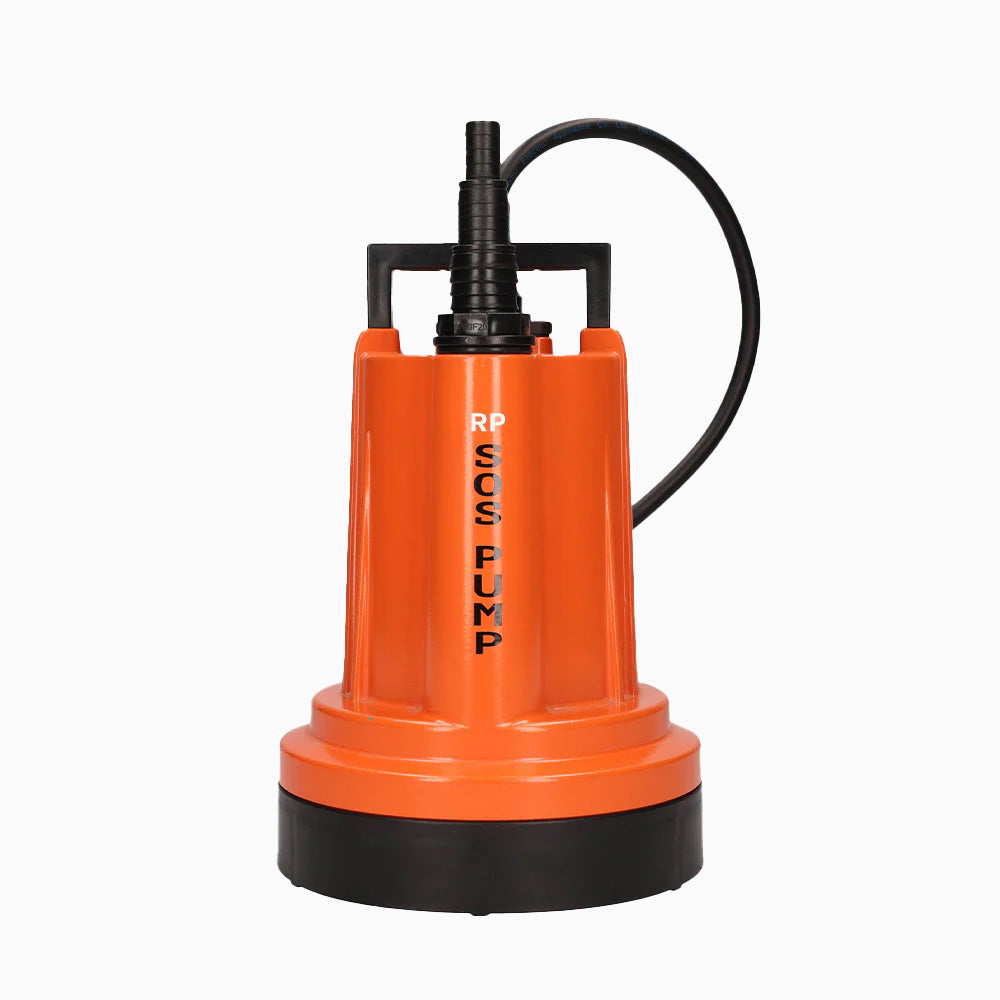
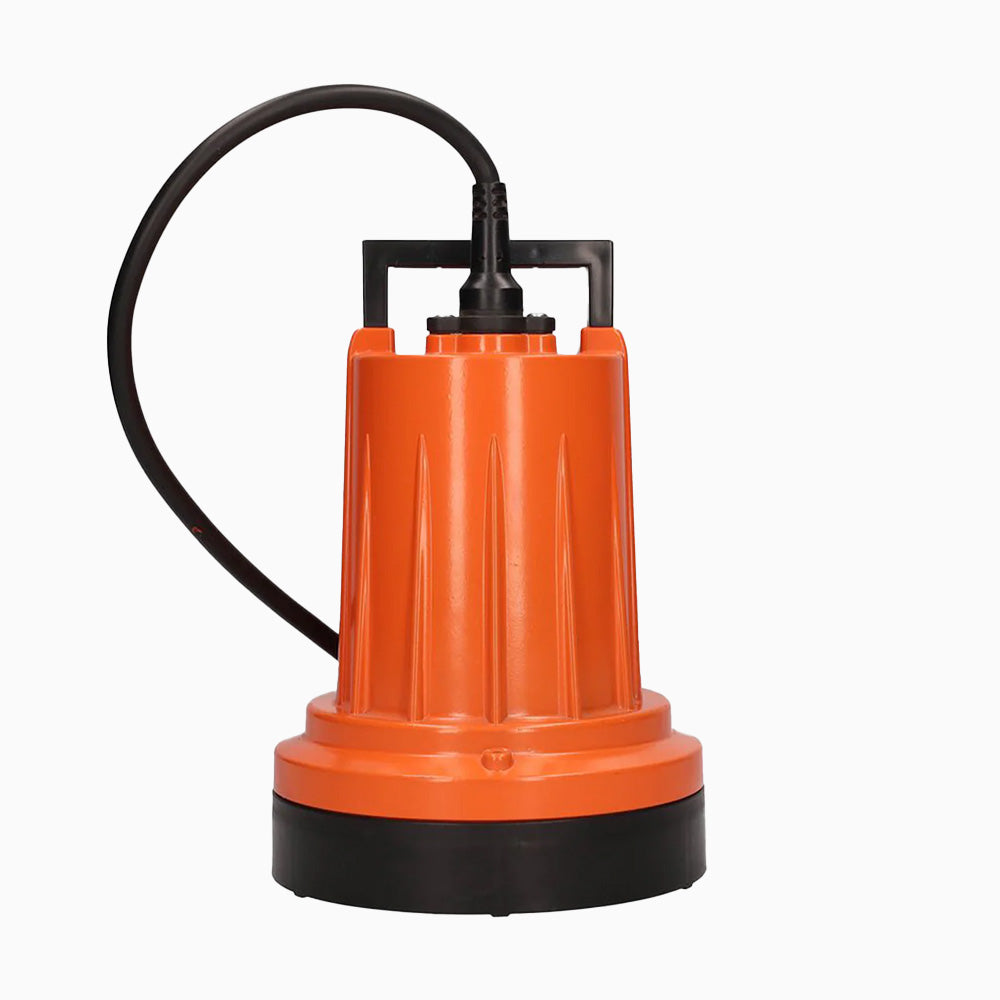
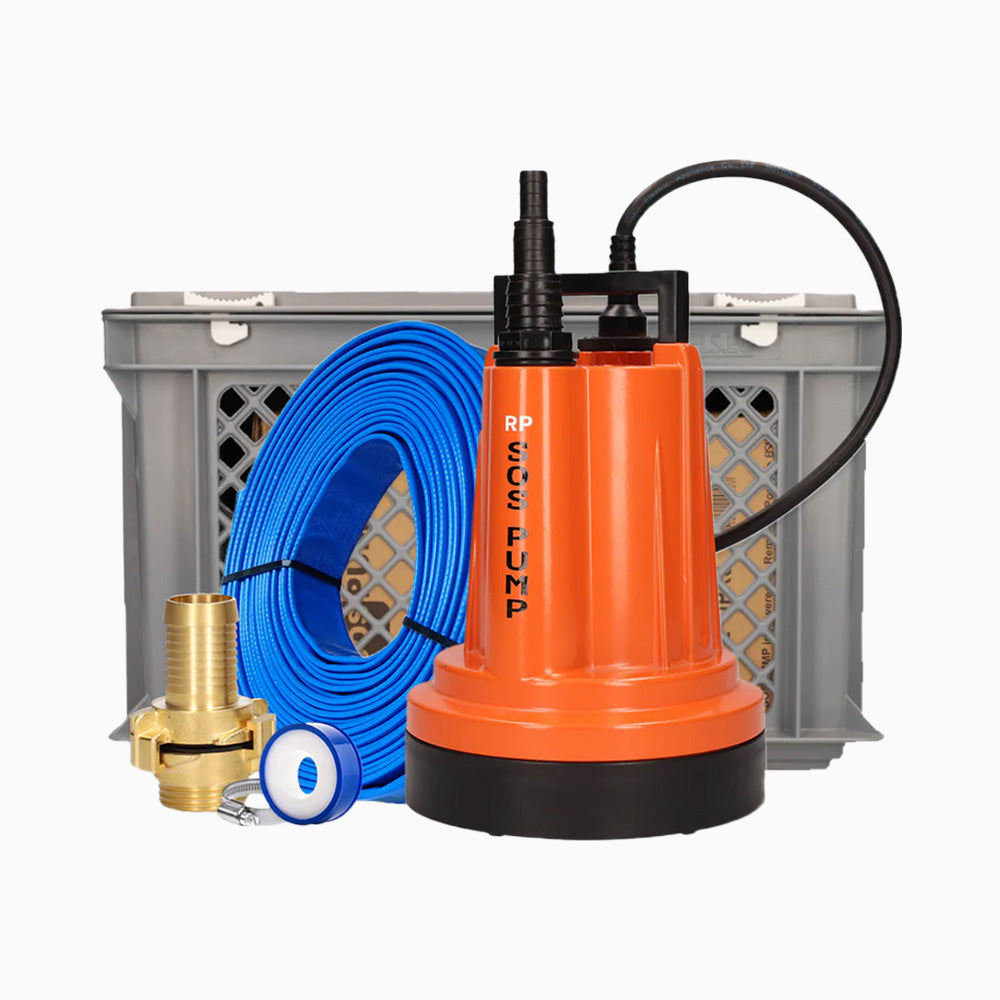
If there's currently a layer of water in your crawl space, the first step is to pump it out. A submersible pump with a shallow suction is the most effective solution. These pumps are capable of extracting water from within a few millimeters of the floor, leaving the space virtually dry.

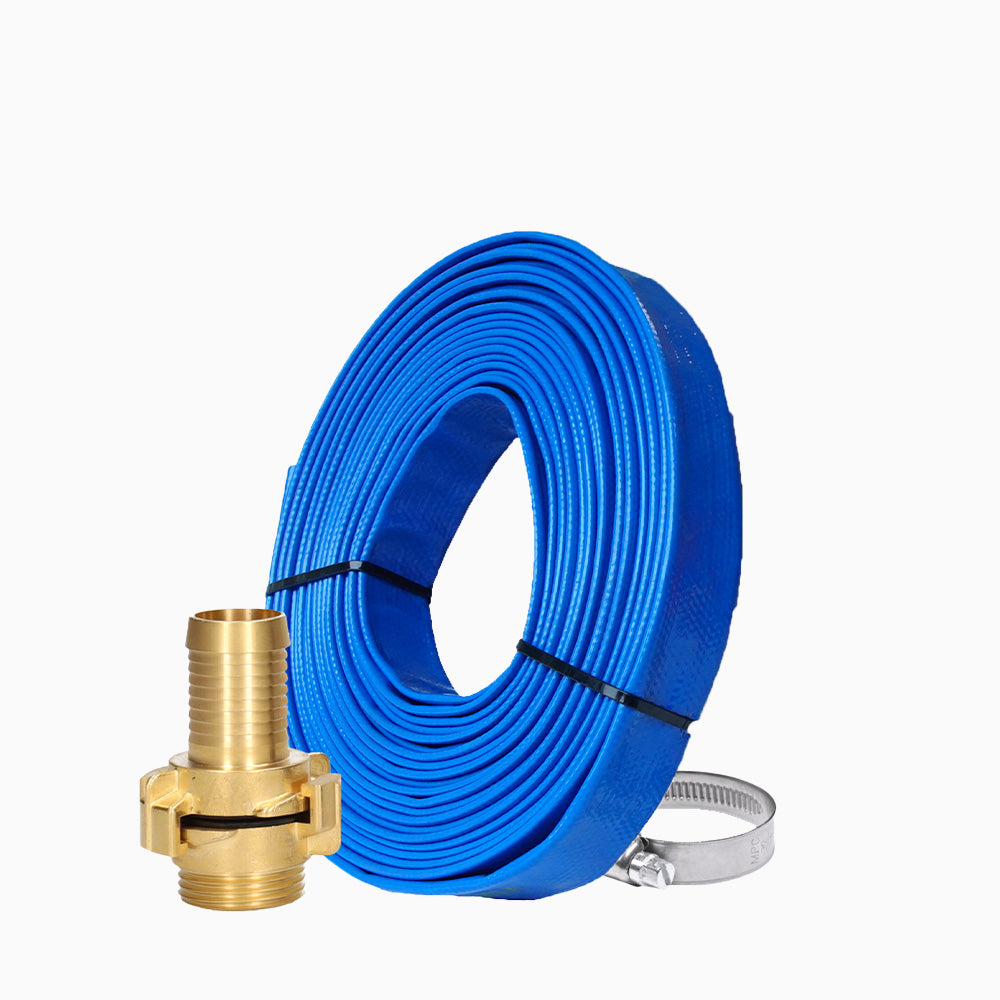
Plug & Play Submersible Pump Set
Structural solutions for the long term
After the water has been pumped out, you want to prevent it from returning. There are several methods to keep the crawl space permanently dry.
Installing drainage
Drainage is one of the most effective ways to reduce groundwater pressure around and under your home. There are several systems to choose from. In the article " Edge Drainage vs. Floor Drainage: Which System Do I Need? ", we explain the differences in detail. For a comprehensive approach, please refer to " Effective Methods for Crawlspace Drainage and Water Drainage ."
Ground closure and insulation
Another method is to apply a barrier to the floor. This can be done with foil or insulation material. " Applying Crawlspace Foil: Step-by-Step Plan for a Dry Floor " is an excellent guide for DIYers. You can also opt for loose materials. A frequently asked question is: " Insulation chips or EPS beads for a wet crawlspace: Which is better? " These materials float on the water and prevent moisture from evaporating and condensing on the floor.
Automatic pump systems
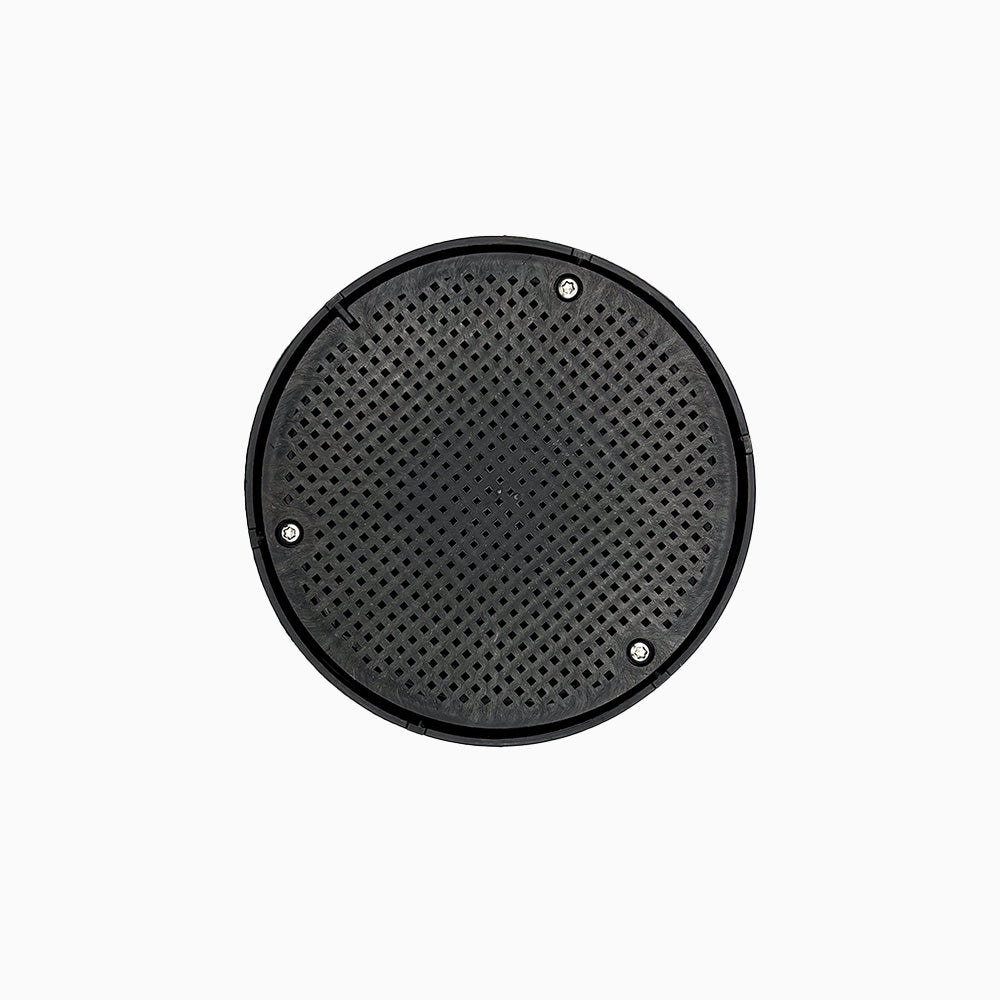
For homes that constantly experience high groundwater levels, a permanent submersible pump with a float switch or sensor is the best choice. As soon as the water level rises, the pump switches on automatically. For installation tips, see " Installing a Crawlspace Pump: Automatic Submersible Pump Tips ."

Submersible pump with water sensor 3mm
Legal aspects and costs
Who is actually responsible for resolving water problems? This is often a point of contention in rental properties. More information can be found in " Who is responsible for groundwater in the crawl space? (Tenant vs. Landlord) ."
Regarding the investment: the costs vary considerably depending on the chosen solution. For an indication of insulation prices, see " The cost of crawl space insulation per m² in 2026. " Remember that a dry crawl space often pays for itself through lower energy bills and the preservation of the property's value.
Step-by-step plan: What to do in case of flooding?
- Inspection: Enter the crawl space (if safe) and determine the source of the water. Is it clear (groundwater) or does it smell (leakage)?
- Ruling out a leak: Check your water meter. Is it running while all taps are closed? Then call a plumber.
- Removing water: Use a vacuum cleaner to drain standing water directly into the sewer or garden.
- Check ventilation: Make sure that the ventilation grilles in the facade are open and clean.
- Make a structural choice: Choose drainage, ground sheeting or " crawl space insulation and ground sealing against moisture " based on the cause.
Frequently asked questions about flooding in the crawl space
Is it allowed to have water in the crawl space?
In principle, a crawl space should be dry. A small puddle after heavy rainfall isn't immediately a disaster, but persistent water can damage the foundation, floors, and the health of the occupants.
How do I remove the last bit of water from the crawl space?
Standard submersible pumps often leave 2 to 5 centimeters of water. To truly dry the space, you need a low-suction submersible pump (also called a mop pump) that can remove up to 1 or 2 mm of water.
Does ventilation help against groundwater?
No, ventilation only helps with condensation and high humidity. If there's a significant amount of water due to a high water table, ventilation won't solve the problem. In that case, drainage or a pump will be necessary.
Is water in the crawl space dangerous for the foundation?
Yes, in the long run. Wooden piles can rot if they dry out after a period of wetness, and concrete can be accelerated by a constantly damp environment.
Share:
Who is responsible for groundwater in the crawl space? (Tenant vs. Landlord)
Crawl space insulation and ground sealing against moisture