

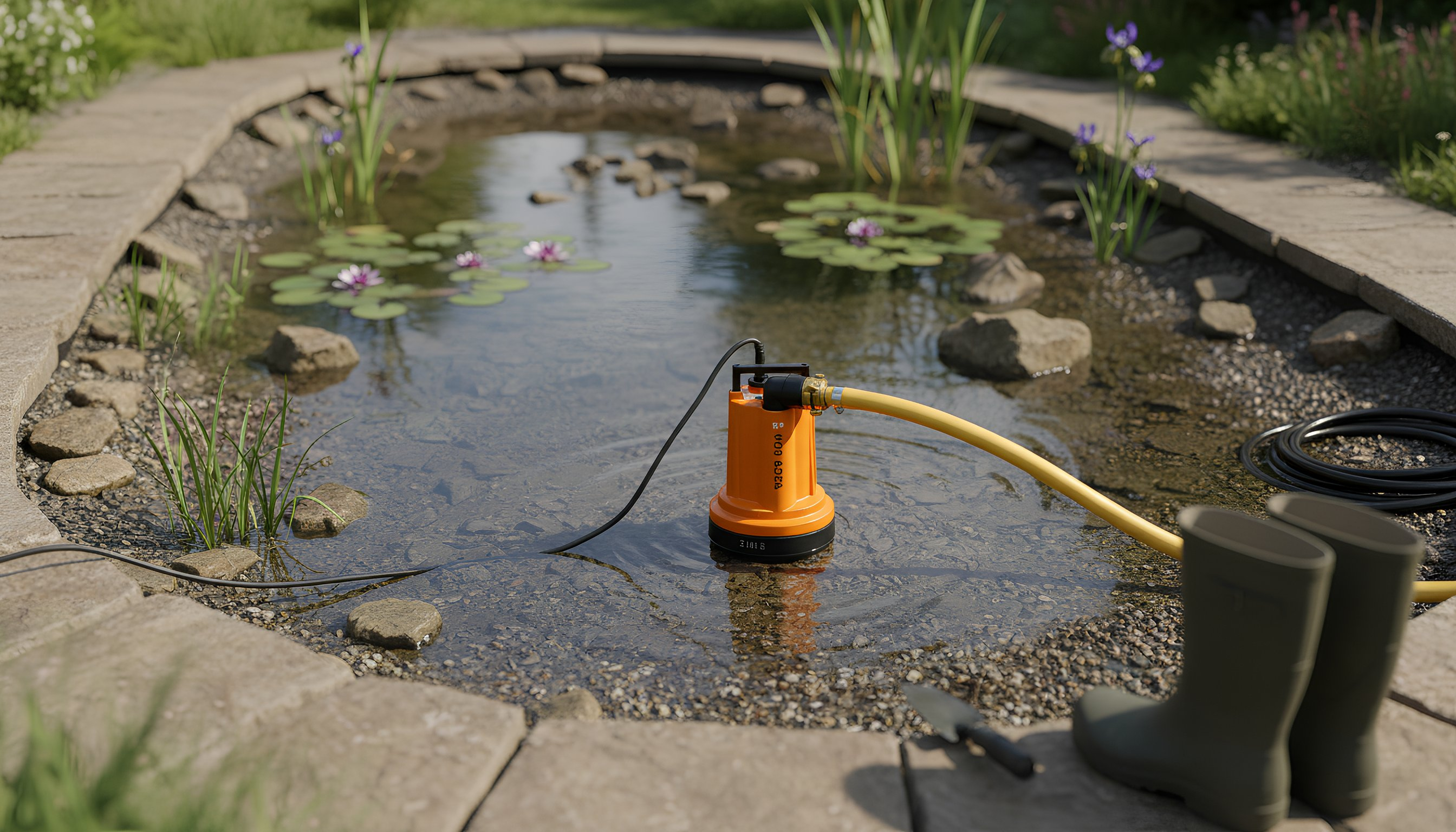
When you work with an electric submersible pump, you're working with a powerful combination of water and electricity. To prevent accidents and extend the life of your equipment, it's essential to observe the proper safety precautions.
The basics of safety with a submersible pump
A submersible pump is specifically designed to operate fully submerged in water. However, this doesn't mean you can be careless. The most important rule is that the pump must always be connected to a grounded outlet protected by a residual current device (RCD). Should a fault occur, the power will be switched off immediately, preventing life-threatening situations.
Before each use, check the housing and power cord for damage. A small tear in the cord can lead to a short circuit in a wet environment. In the article " Submersible Pump Troubleshooting and Safety ," we discuss specific risks and how to recognize them in more detail.
Working in wet environments: What should you pay attention to?
When pumping out a cellar or well, you often find yourself standing in the water. Therefore, always wear rubber boots and never lift the pump out of the water by the power cord. Always use the handle or a sturdy rope attached to the pump. This prevents the internal wiring from becoming loose or the watertight seal of the cable entry from being damaged.

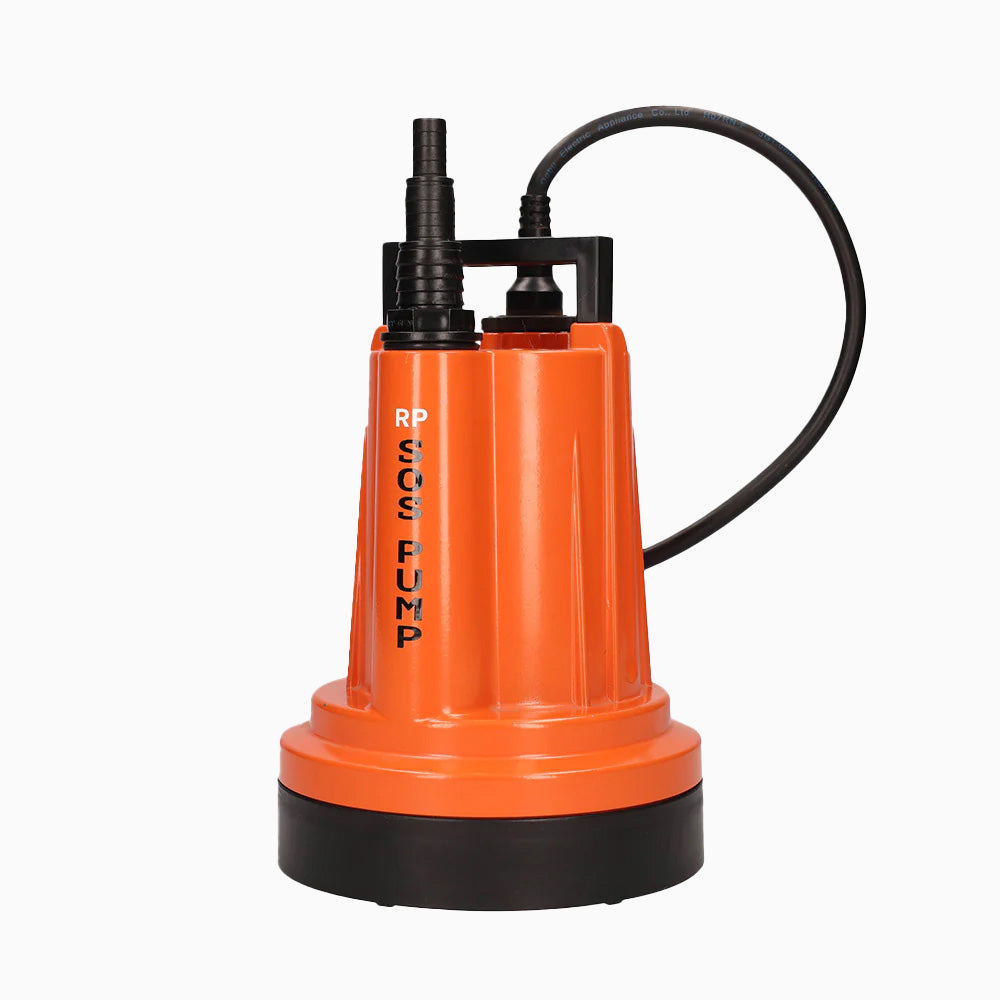
Power cable 10 meters
If you notice your pump's cable is worn, replace it immediately with a certified part to ensure watertightness. You can read more about this in " Installing and Maintaining a Submersible Pump: Tips for a Long Life ."
Prevent running dry and overheating
A submersible pump is cooled by the water flowing around or through it. If the pump continues to run when there is no water left (running dry), the motor can overheat. This is not only harmful to the pump but can also, in extreme cases, pose a fire hazard. Therefore, it's best to use a pump with a float switch or an external sensor that automatically switches off the pump when the water level drops too low.

Crab Float Water Sensor 3mm
Want to know exactly how this mechanism works? Check out our article " How Does a Submersible Pump with a Float Switch Work? " for a detailed explanation.
Maintenance for safe operation
Limescale and dirt can block the float, preventing the pump from shutting off. This can lead to unsafe situations. Regular cleaning is therefore essential. In " Submersible Pump Maintenance: How to Prevent Limescale and Clogs, " we explain the best approach.
Frequently asked questions about safety
Can I use a submersible pump in a pool where people swim?
No, it is strictly prohibited and extremely dangerous to use a submersible pump while people or animals are in the water. Always turn off the pump and remove it before entering the water.
What should I do if my pump's power cord is damaged?
Do not use the pump again under any circumstances. The cable must be replaced by a qualified repairer or with an original replacement kit to ensure a watertight seal.
Is a residual current device really mandatory?
Yes, for your own safety, a residual current device (RCD) (30mA) is essential when working with electrical equipment in a wet environment. It's the most important protection against electrocution.
Share:
Buying a Submersible Pump? The Ultimate Guide for 2026