

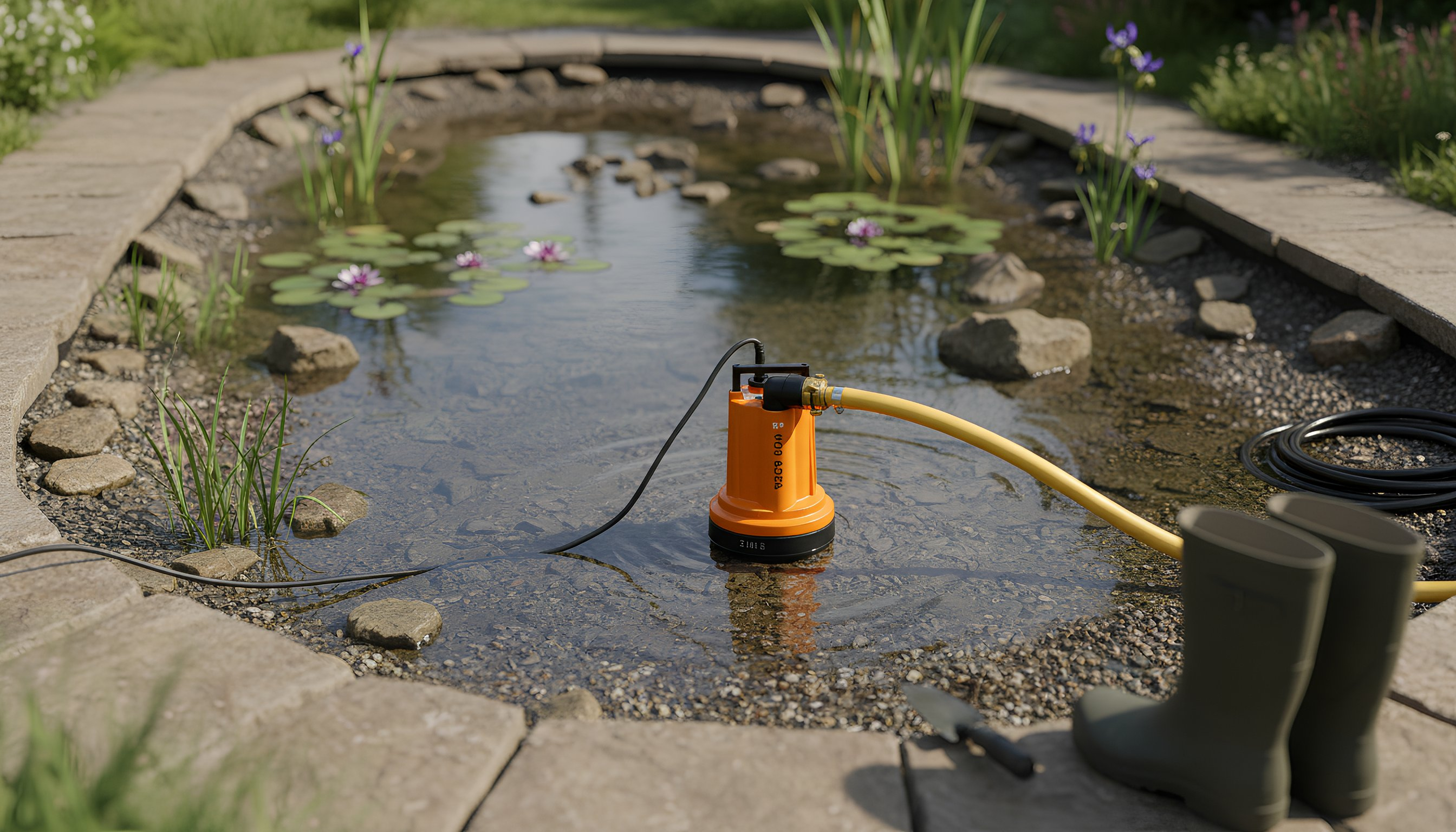
Are you facing the challenge of keeping a cellar or well dry without having to constantly stand next to it? A submersible pump with a float switch is the ideal solution for automatic water drainage.
The Basics: What Does a Float Switch Do?
A submersible pump is designed to operate completely submerged in water. But you don't want the pump running constantly, especially when there's no water to move. This is where the float switch comes in. The float acts as the "brain" of the pump: it senses the water level and signals to turn the motor on or off.
When the water level rises, the float floats upward. Once a certain point is reached, the electrical circuit is closed and the pump starts running. Once the water level has dropped sufficiently, the float drops back down and breaks the connection, stopping the pump. This prevents dry running, which can damage the motor.
Different Types of Floats: External vs. Internal
Not every float works the same way. In practice, we distinguish between two main types: the float on a cable (external) and the internal float or electronic sensor.
The external float (float ball)
This is the most common variant: a floating "ball" attached to the pump with a cable. Its advantage is its simplicity and reliability. The disadvantage is that this float requires space to move freely. In a narrow well, the float can get stuck against the wall, preventing the pump from shutting off. You can read more about this in " What to do if your submersible pump no longer shuts off? "
The internal float and water sensor
For tight spaces, such as a narrow drain or a small basement, a pump with an internal float or an electronic sensor is the best choice. These sensors detect the water level without the need for a physical arm or cable. This makes the system much more compact and less prone to malfunctions in small spaces.

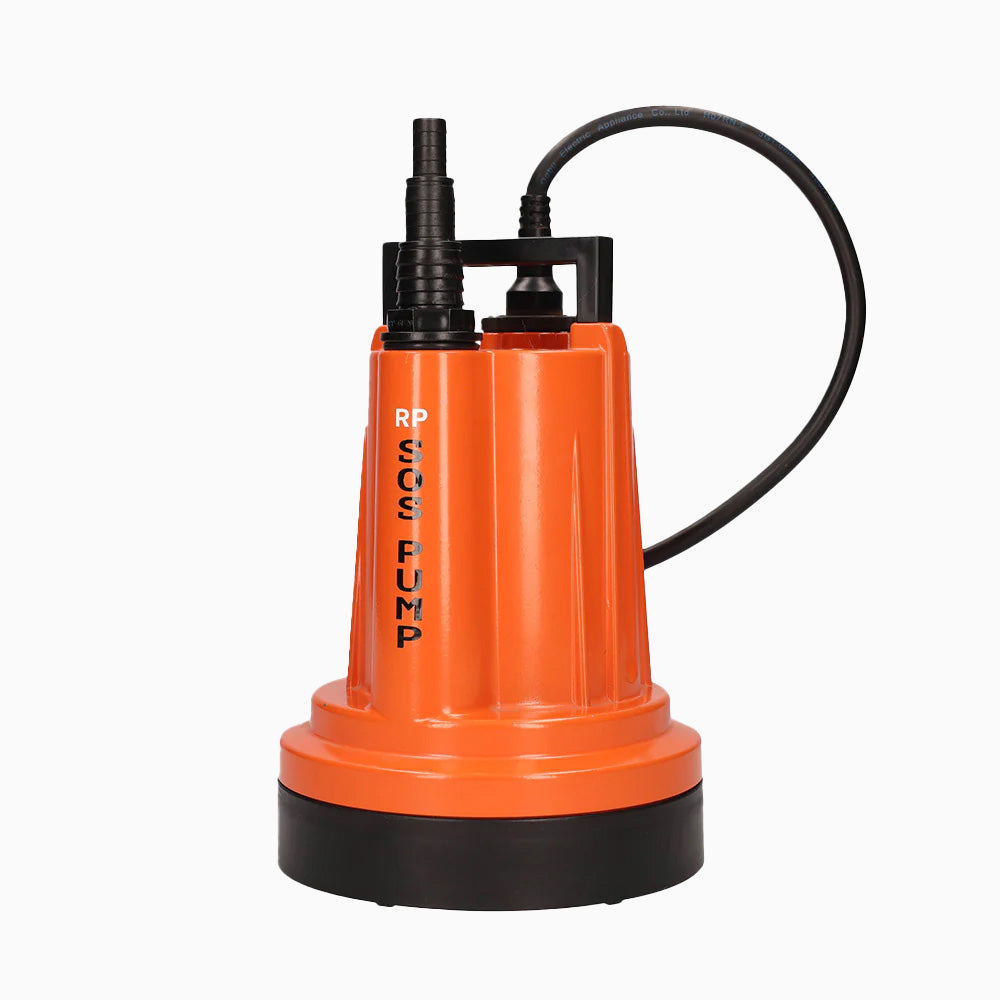
Submersible pump with water sensor 3mm
Why choose an automatic submersible pump?
The biggest advantage of an automatic submersible pump is peace of mind. Whether it's a sudden rain shower or a leak, the pump automatically switches on. When choosing one, it's important to consider the cut-in height. Some pumps only activate at 10 cm of water, while specialized submersible pumps can react to a few millimeters.
For optimal results, choosing the right capacity is essential. In our article " How do you calculate the required capacity (m³/hour) of a submersible pump? " we explain exactly how to do this. Also, don't forget that good drainage is crucial; a hose that is too thin can hinder the pump.

Non-return valve 25mm
Conclusion
A submersible pump with a float switch is an indispensable tool for water management around the house. Whether you choose a robust external float switch or an advanced sensor for surface suction, the automatic operation saves you time and prevents water damage. For a complete guide on purchasing, please visit " Buying a Submersible Pump? The Ultimate Guide for 2026. "
Frequently Asked Questions
Can I also operate a float manually?
Yes, with most pumps that have an external float, you can hold the float up or lock it in place to manually run the pump. Be sure to turn the pump off manually to prevent dry running.
What is the minimum switch-on height?
This varies by model. Standard pumps often activate around 10-15 cm. However, special flat suction pumps with an electronic sensor can activate at a water level of just 1 mm or 3 mm.
My float is stuck, what now?
This is often due to dirt or too little space. Clean the float and make sure it moves freely. See also " Submersible pump not starting: Causes and solutions " for more help.
Share:
Submersible pump not starting: Causes and solutions
Buying a Submersible Pump? The Ultimate Guide for 2026