

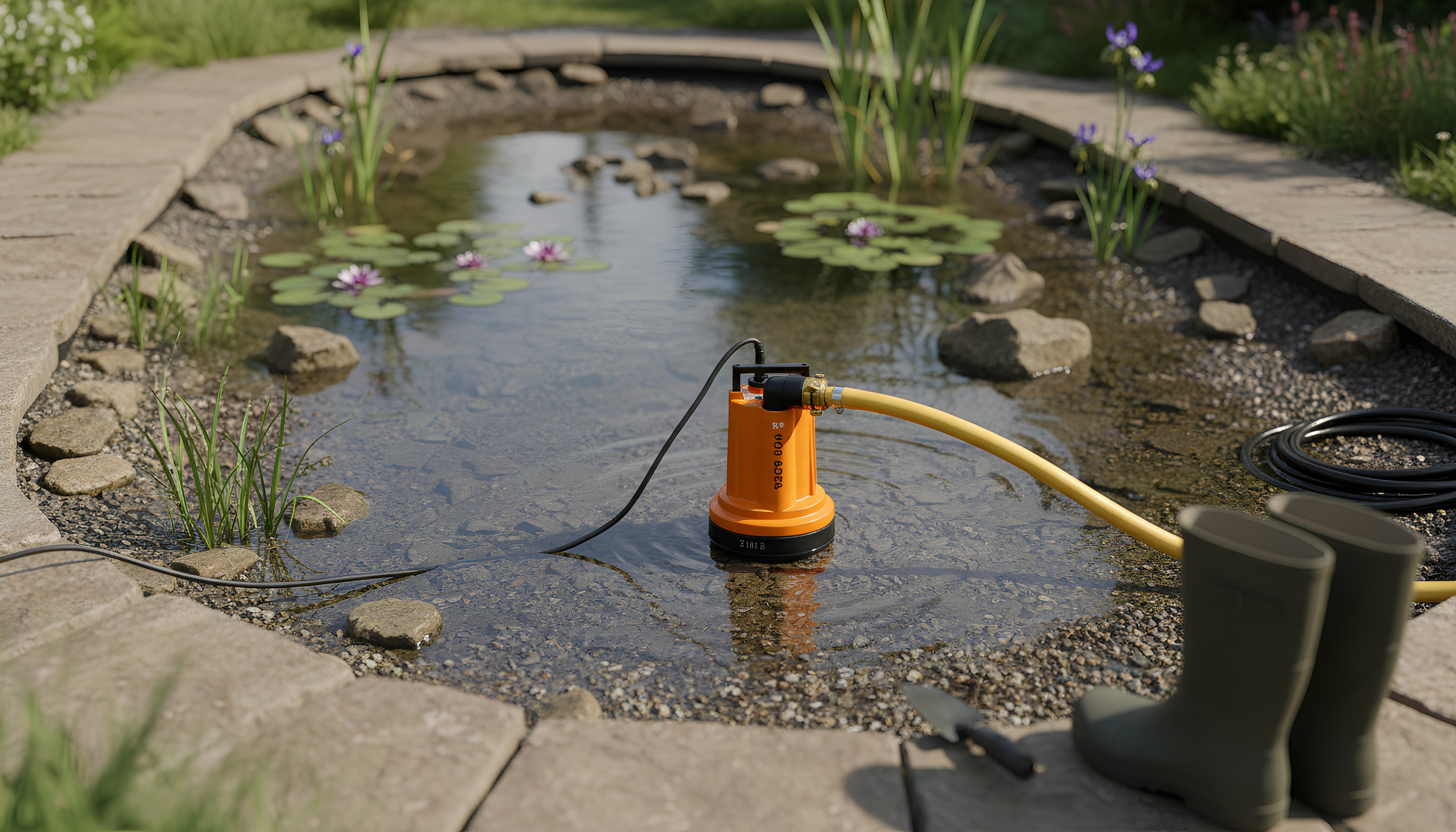
Does your submersible pump keep running, even after the water has drained? A pump that doesn't shut off can lead to overheating and unnecessarily high energy bills.
Why a submersible pump keeps running
A submersible pump is designed to move water until it reaches a certain level. Normally, a float switch or sensor stops the motor when the water level drops. However, if the pump continues to run without moving water, there is usually a mechanical or electronic defect. This is not only detrimental to the motor's lifespan but can also be dangerous if the pump runs dry.
In many cases, the cause lies with the float. In our article, "How Does a Submersible Pump with a Float Switch Work?", we explain exactly how this mechanism works. However, if it malfunctions, you need to take immediate action.
Most common causes of float problems
There are three main reasons why a float will no longer turn off the pump:
- Blockage: The float is physically stuck against the wall of the well or behind a pipe, causing it to remain in the 'on' position.
- Contamination: Grease, lime or mud has built up around the sensor or float pivot point.
- Faulty sensor: With electronic sensors, an internal fault can cause the pump to think there is still water present.

Crab Float Water Sensor 3mm
Step-by-step plan: Stop the pump again
If you notice the pump won't stop, follow these steps to prevent further damage:
1. Check the float position
Check if the float moves freely. Sometimes the pump shifts during vibration, causing the float to become stuck. For more tips on proper placement, see Installing and Maintaining a Submersible Pump: Tips for a Long Life .
2. Clean the sensors
Limescale and dirt are the biggest enemies of proper operation. Use a soft brush to clean the float or electrodes. In "Submersible Pump Maintenance: How to Prevent Limescale and Clogs," you can read the best approach.
3. Test the automatic mode
Remove the pump from the water and manually move the float up and down. Do you hear the switch click? If not, the internal switch is probably broken.
When is replacement necessary?
Sometimes the internal electronics of a submersible pump are simply worn out. If the motor is still good, but the float remains unreliable, you might consider installing an external level switch. This often offers more precise control, especially in tight spaces where a traditional float can easily get stuck.

Electrode Level Switch 1mm
If the pump continues to malfunction after cleaning and inspection, see " Submersible pump not starting: Causes and solutions" for a complete list of electrical faults.
Frequently asked questions about continuous submersible pumps
Can a submersible pump burn out if it doesn't switch off?
Yes, if a pump continues to run without water (running dry), the motor cannot dissipate its heat to the water and will eventually overheat and burn out.
How can I prevent a stuck float?
Ensure there is sufficient space around the pump and check regularly for dirt buildup. In narrow wells, it's best to use a pump with an internal float or an electronic sensor.
My sensor is clean but the pump still won't stop, what now?
There may be a stuck relay on the pump's circuit board. In that case, professional repair or replacement of the pump is often the only safe option.
Share:
Submersible pump not starting: Causes and solutions
Buying a Submersible Pump? The Ultimate Guide for 2026