

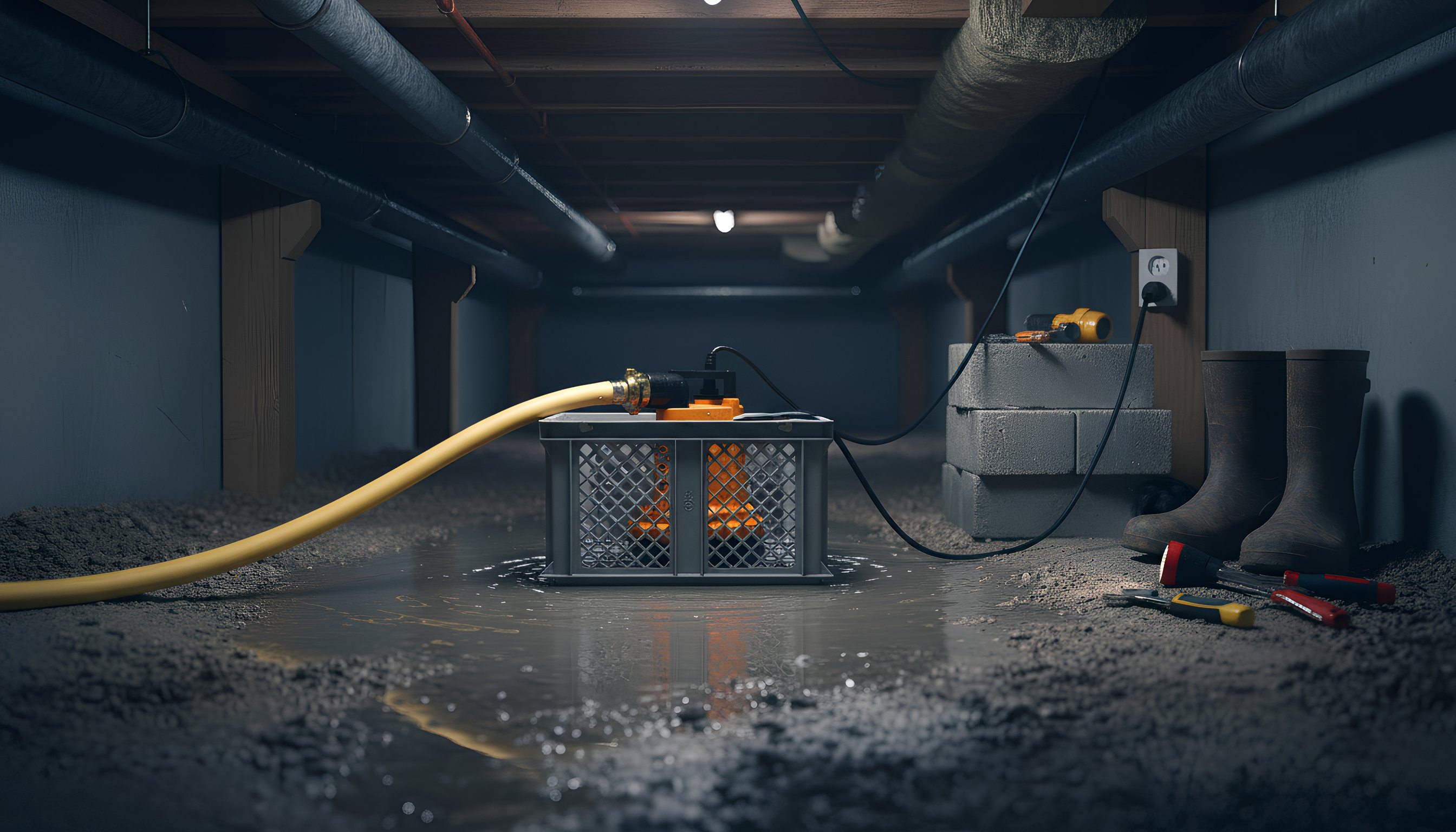
Are you facing a challenge with excess water filled with sand, mud, or small stones? This article will tell you exactly when a submersible dirty water pump is the lifesaver and which specific scenarios require this powerful machine.
What makes a submersible pump for dirty water unique?
Not every pump is the same. While a clean water pump immediately seizes up as soon as a grain of sand gets into the mechanism, a submersible dirty water pump is specifically designed to move liquids containing solids. This is due to the larger passage and the robust impeller in the pump. Whether it's rainwater in a construction pit or cloudy water in a pond, these pumps handle it with ease.
Understanding the capacity and maximum particle size is crucial here. You can read more about this in the article " What is particle size in a submersible pump and why is it important? " It determines whether the pump is suitable for lightly contaminated water or for heavy-duty work with larger dirt particles.
Scenario 1: Flooding in the basement or crawl space
One of the most common reasons to purchase a submersible pump for dirty water is a flooded basement after heavy rainfall. This water is rarely clean; it carries dust, sand, and other debris from the floor or through the walls. A standard pump would quickly fail in this situation.
For basements, it's often desirable for the pump to switch on automatically when the water level rises. In such cases, choosing the right float is essential. For more information about this mechanism, see " Submersible pump with float vs. without float: The differences ." In tight spaces where a traditional float arm doesn't fit, a model with an internal sensor offers a solution.

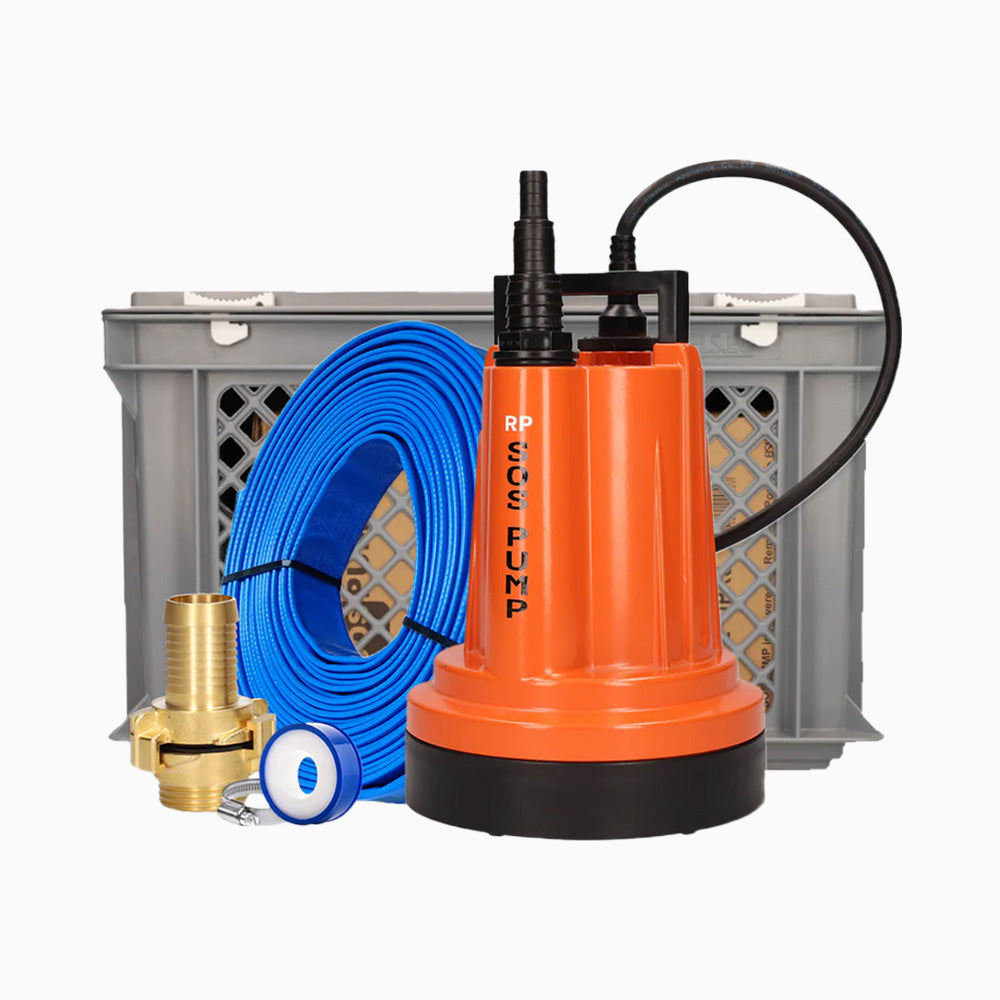
Plug & Play Submersible Pump Set
Scenario 2: Draining a pond or natural pool
Do you want to give your pond a thorough overhaul, or does it need to be emptied completely? Pond water is full of organic matter like leaves, algae, and sludge. A submersible pump for dirty water is the only option. The pump can effortlessly handle these soft particles without the motor overheating.
When working in a pond, it's important to pay attention to the substrate. Ideally, place the pump on a raised surface (such as a paving stone) to prevent it from getting stuck in the thick layer of mud at the bottom. For specific pond maintenance tips, please refer to " The best submersible pump for your pond or natural pool ."
Scenario 3: Construction pits and drainage projects
On construction sites, water is often the biggest enemy. A rain shower can quickly turn a freshly dug foundation or excavation pit into a mud pit. A powerful sewage pump is essential in this situation. Because the water on construction sites is often extremely contaminated with sand and gravel, you need a pump with high wear resistance.
In these situations, pumps made of more robust materials are often chosen. In our article "Stainless Steel vs. Plastic Submersible Pumps: Which Material Lasts Longer?" we explain why a stainless steel housing is often preferred for professional use on construction sites. For truly heavy-duty work, we recommend consulting " Construction Pit Draining: Which Heavy-Duty Submersible Pump Do You Need? "

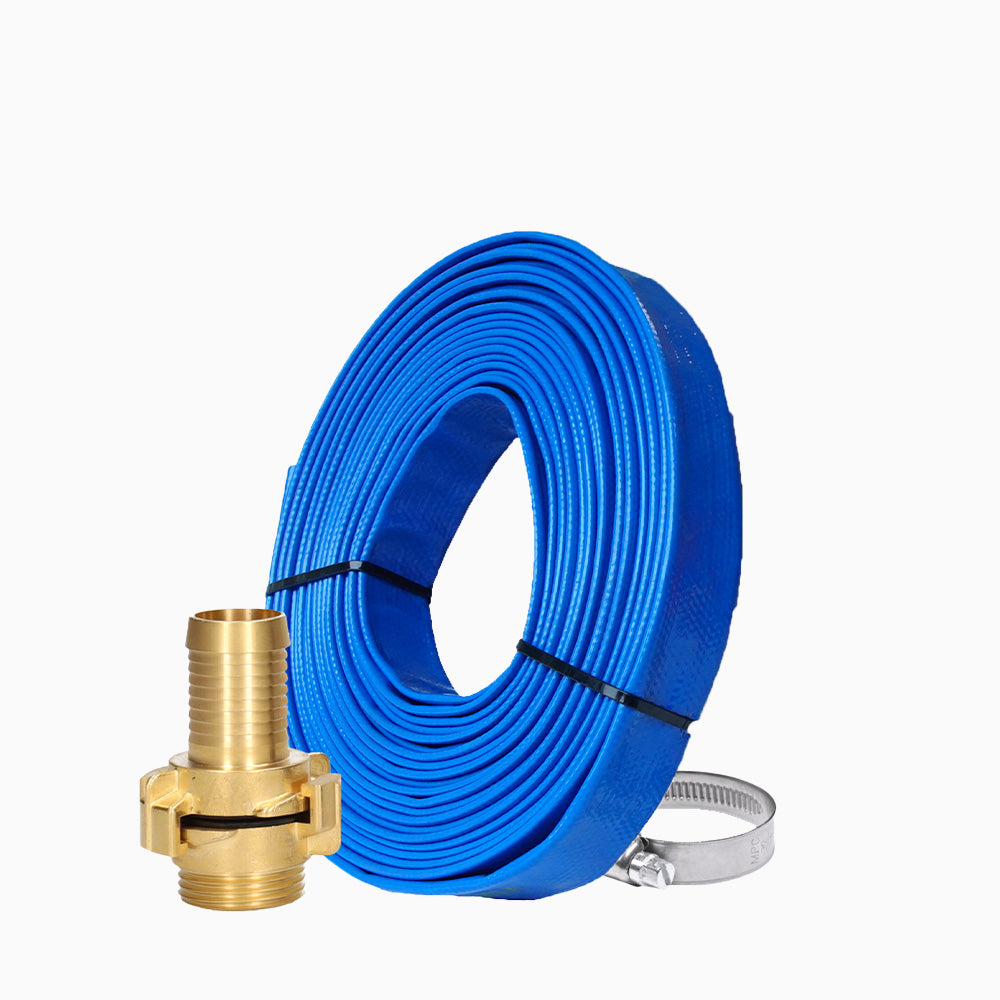
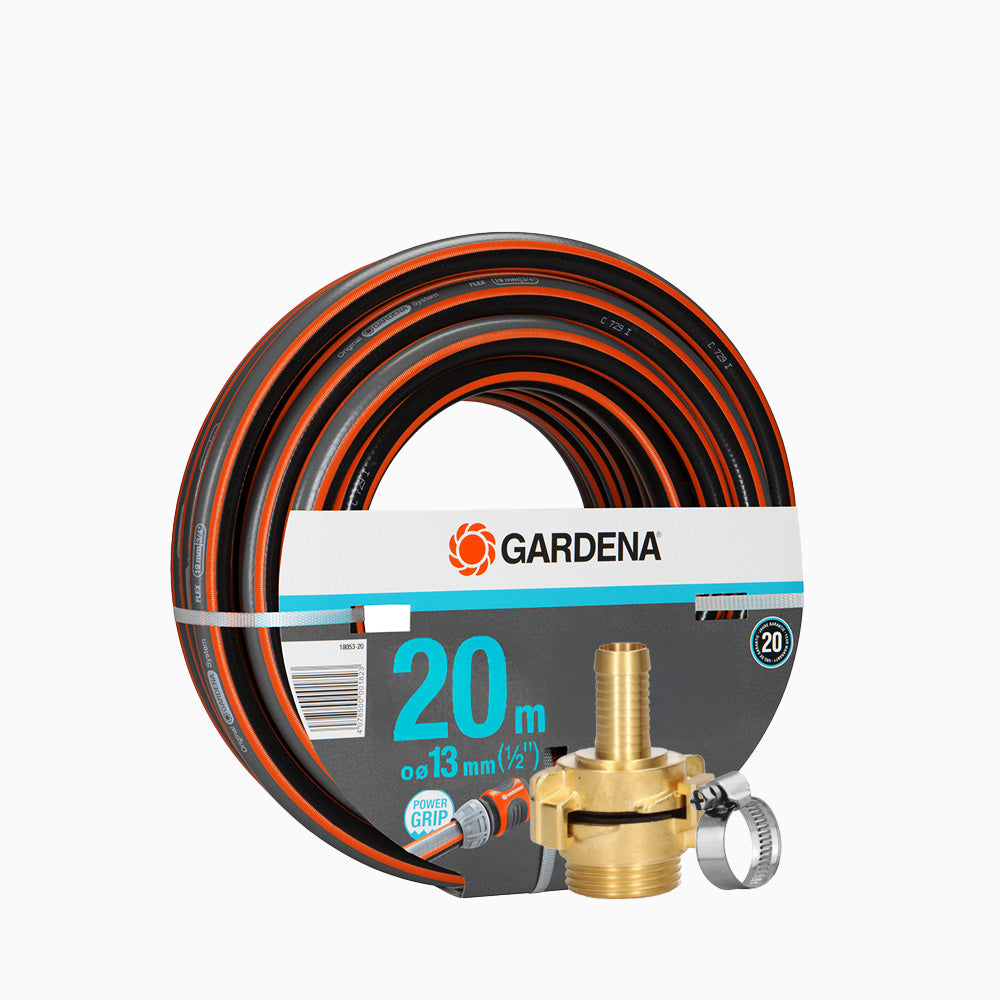
Water hose set 12.5m 25mm
When do you choose a flat vacuum cleaner?
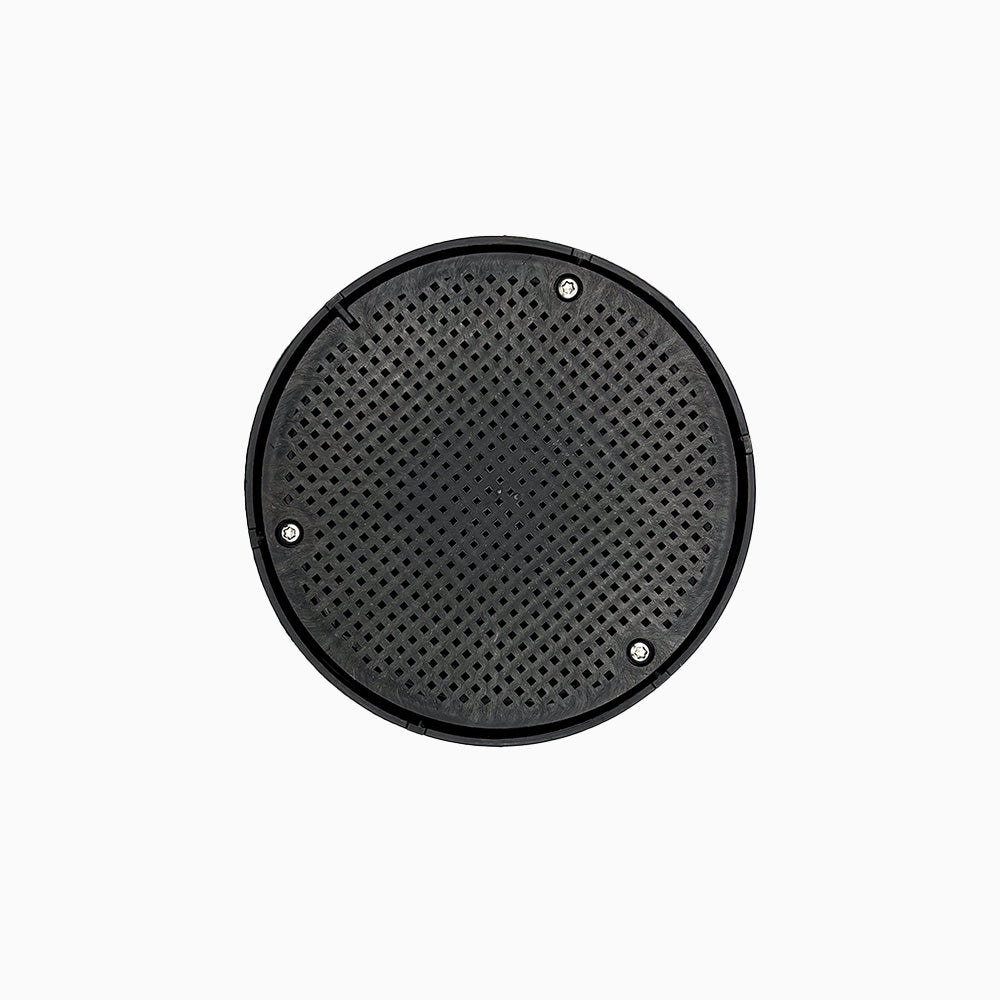
While a standard sewage pump is powerful, it often leaves behind a layer of water several centimeters deep. If you really want to dry a basement or flat roof, you need a submersible pump with a low suction. These pumps can remove water down to just a few millimeters, leaving the space "mop-dry." This is ideal for situations where water damage to the floor needs to be prevented.
Want to know how to optimally install such a pump? Then check out our " Step-by-step plan: Installing a submersible pump in the basement ."
Maintenance after use in dirty water
Because the pump comes into contact with mud, sand, and sometimes even chemicals, maintenance after use is crucial for its longevity. Always flush the pump thoroughly with clean water and check that the suction strainer is free of blockages. A clogged pump is the leading cause of malfunctions. For a comprehensive guide, read " How to clean a wastewater submersible pump after use? "
If your pump unexpectedly stops working properly, please consult " Common problems: Why isn't my submersible pump pumping water? " for a quick diagnosis.
Frequently asked questions about wastewater submersible pumps
Can a submersible dirty water pump also pump clean water?
Yes, a dirty water pump can pump clean water without any problems. However, the reverse is not true: a clean water pump will break if it gets dirty.
What is the maximum size of the dirt particles?
This depends on the particle size of the specific pump. Most consumer-grade submersible wastewater pumps can handle particles between 20 mm and 35 mm.
Can I leave the pump in the water when not in use?
Although the pumps are waterproof, it is better to remove the pump from the water after use, clean it and store it dry to prevent corrosion and limescale deposits.
Share:
How do you clean a wastewater submersible pump after use?
The Ultimate Guide to the Submersible Dirty Water Pump: Everything You Need to Know