

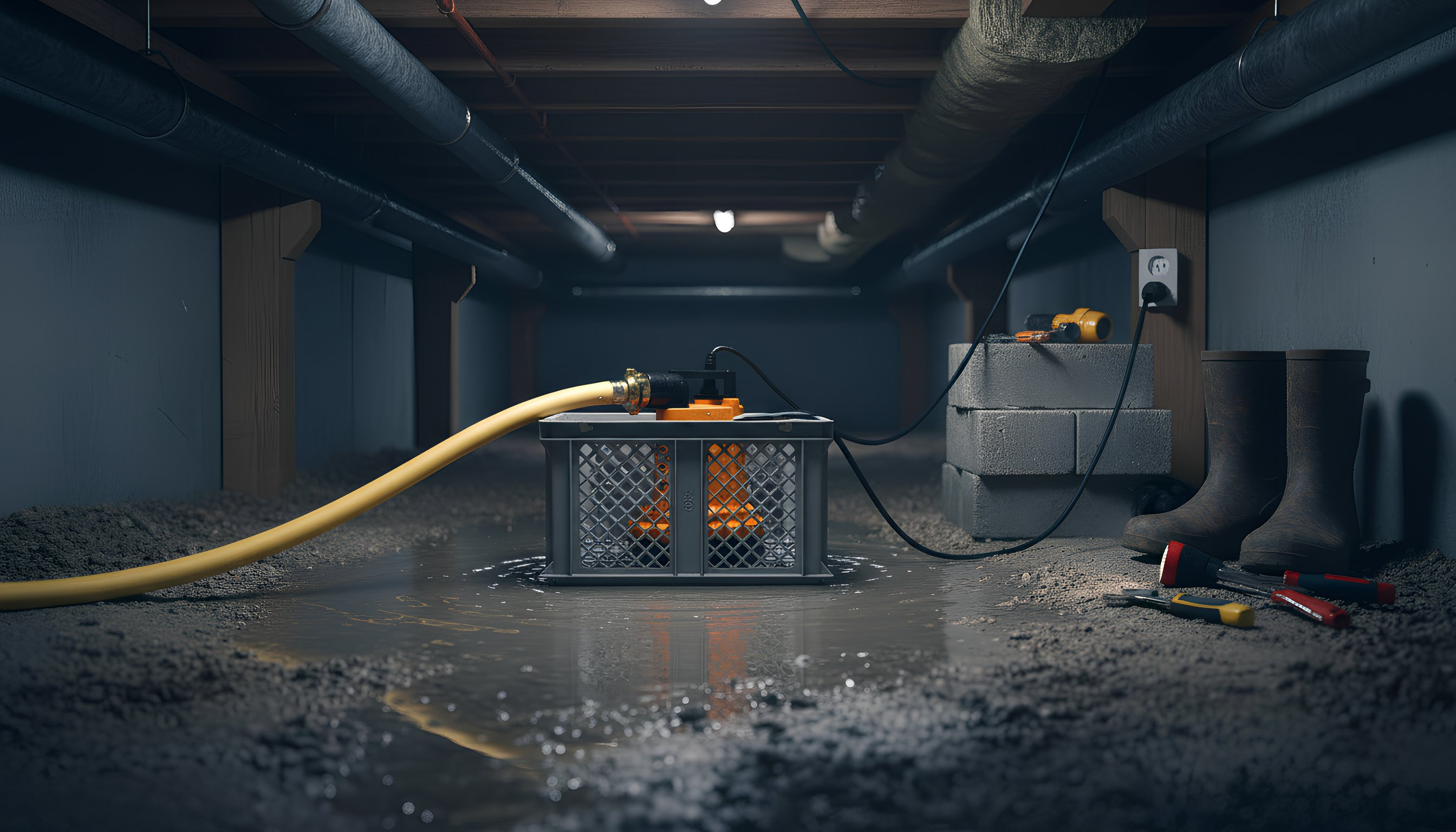
Are you faced with the choice between a submersible pump with a float switch or a model without one? Understanding automatic start-up and the physical limitations of your space is essential for making the right purchase decision.
What is the difference between a submersible pump with and without a float?
The fundamental difference between these two types lies in the way the pump is activated. A submersible dirty water pump with a float is designed for automation. The float floats on the water surface; as the water level rises, the float rises and the pump switches on. As the water level drops, the float drops and the pump automatically switches off.
A submersible pump without a float switch (or with a manual switch) often requires you to turn it on and off manually by plugging it into a wall socket. While this is less convenient, it does give you complete control over the process, which can be useful when pumping a mop dry.
The challenge of narrow spaces
A common problem with a standard submersible wastewater pump with a float arm is that the float needs space to move. In a narrow well or a small crawl space, the float can get stuck against the wall, causing the pump to either not start or not stop running (with the risk of burning out). For such situations, a pump with an internal float or an electronic sensor is the ideal solution.
Also read our article "The Benefits of a Submersible Pump with an Internal Float" to understand how this technology saves space. For those truly looking for precision in a tight environment, an external sensor is often the best choice.

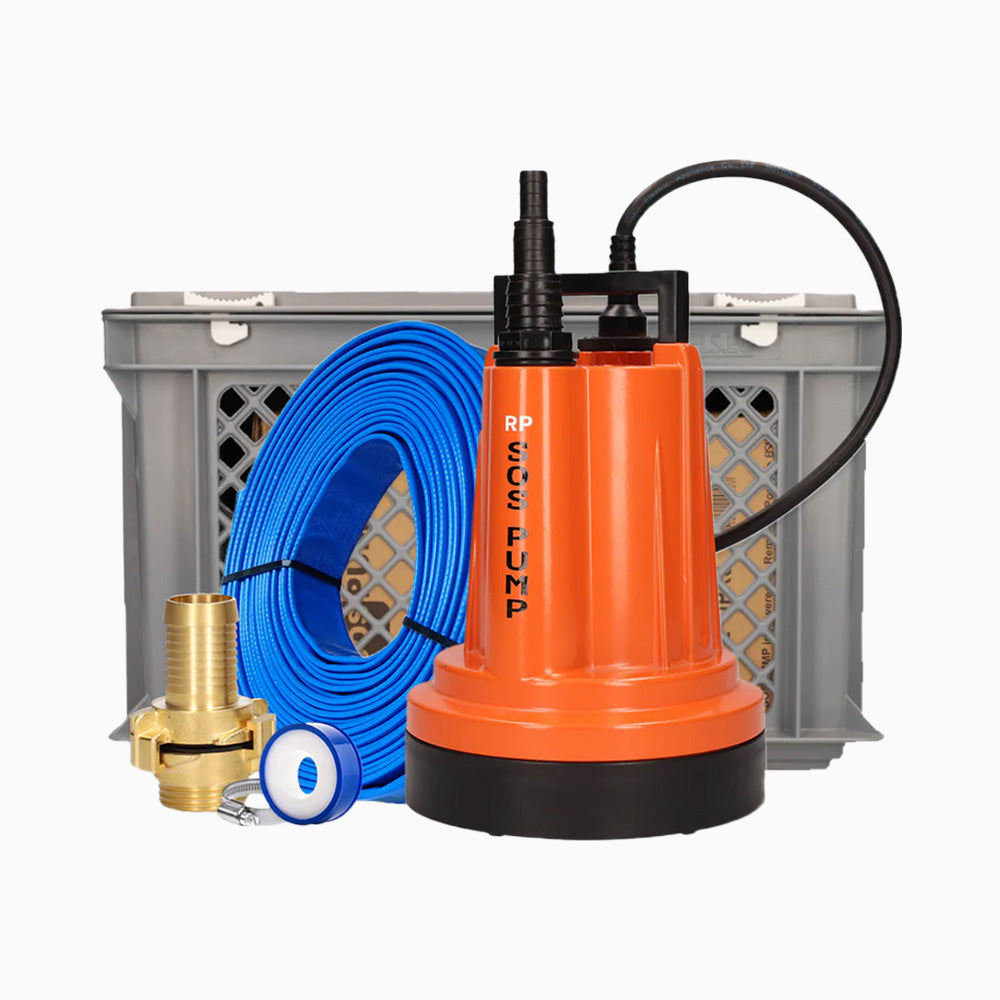
Plug & Play Submersible Pump Set
When do you choose which option?
Choose a submersible pump with a float if:
- You want to permanently place the pump in a well (for example to prevent basement flooding).
- You don’t want to be constantly present to monitor the pump.
- There is enough space for the float to move freely.
Choose a submersible pump without a float (or with a sensor) if:
- The space is too narrow for a floating float.
- You want to pump away the water down to the last millimeter (flat suction).
- You use the pump occasionally for jobs where you can attend to it yourself.
In the article " How to choose the best submersible pump for dirty water? " we delve deeper into the specific features you should look for when purchasing.
Flat suction and residual water
A key aspect of a submersible dirty water pump is the minimum water level. Traditional float switches often only switch off when there are still a few centimeters of water. If you really want to leave a room "mop dry," you need a flat suction pump. Some modern pumps combine an electronic sensor with a flat suction base, giving you the best of both worlds: automation and a dry floor.

Non-return valve 25mm
Frequently Asked Questions
Can I also secure a float?
Yes, many pumps allow you to click or secure the float to the housing. The pump then operates in manual mode and continues pumping as long as there's power. Be careful not to run the pump dry.
What is the advantage of an electronic sensor over a float?
An electronic sensor has no moving parts that can get stuck and can detect water at a much lower level (sometimes as low as 1 mm), which is ideal for flat vacuuming in narrow spaces.
How do I maintain the float of my wastewater pump?
Rinse the float regularly with clean water to prevent mud or dirt from blocking its movement. You can read more about this in " Installing and Maintaining a Submersible Wastewater Pump ."
Share:
How do you clean a wastewater submersible pump after use?
The Ultimate Guide to the Submersible Dirty Water Pump: Everything You Need to Know