

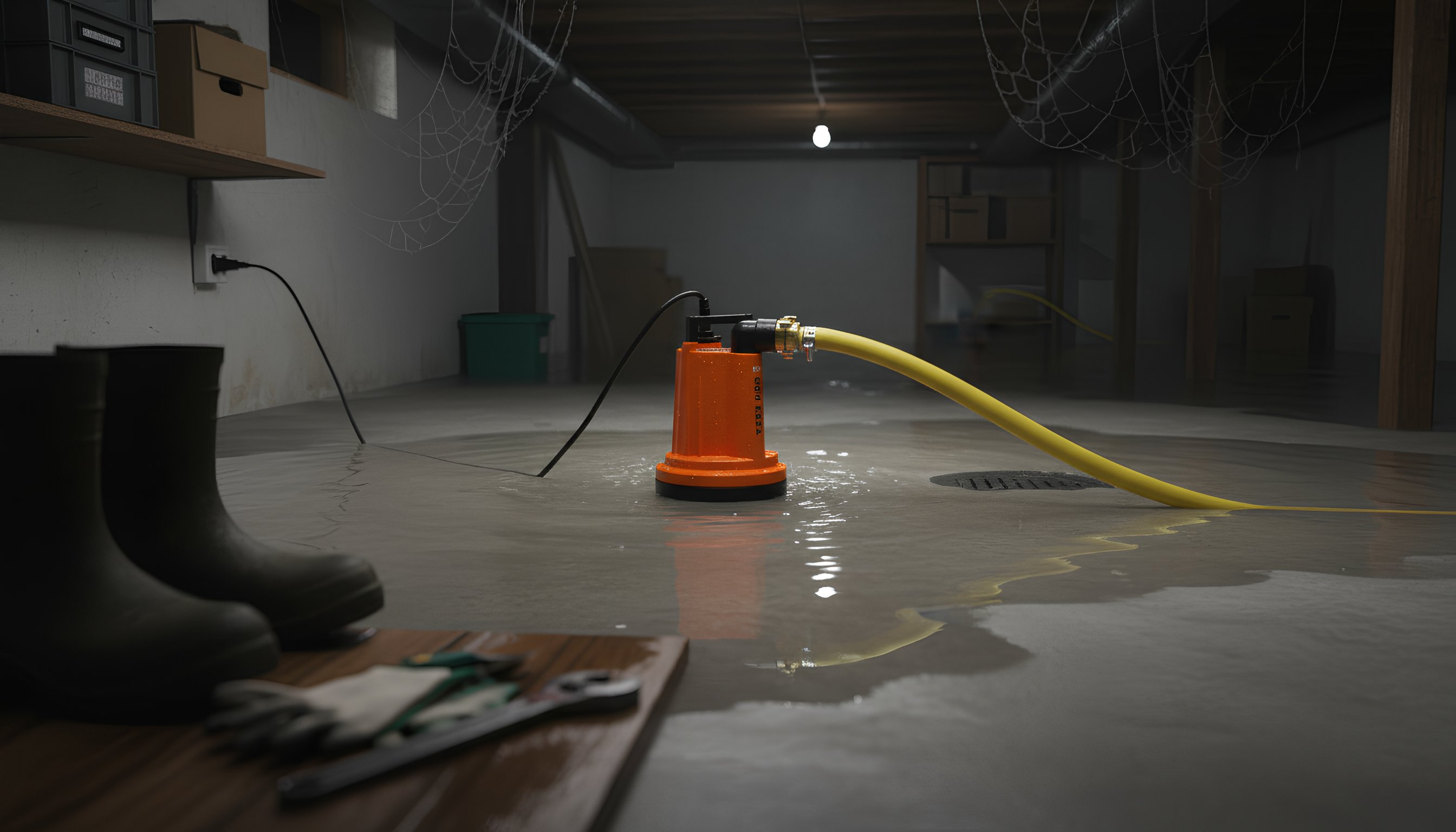
Are you faced with the choice between a flat vacuum with an internal float or an external model, but unsure which is best for your situation? This article explains the crucial differences, so you'll never be left with a flooded basement or well again.
What is a float valve and why is the float important?
A flat suction pump is a special type of submersible pump designed to pump water to within a few millimeters of the floor. This is also known as a "mop-dry" pump. The float plays a key role in this: this component determines when the pump automatically switches on and off. Without a properly functioning float, the pump could run dry, damaging the motor.
When choosing the right pump, available space is often the decisive factor. In The Ultimate Guide to Flat Vacuums: Everything You Need to Know About Mop-Dry Pumps, you can read more about the general operation of these devices.
The external float: Reliable but space-consuming
An external float is usually a float attached to the pump with a cable. As the water level rises, the float floats. Once it reaches a certain angle, the pump receives the signal to start.
Benefits of an external float
- Simple mechanism that rarely fails due to dirt.
- Often cheaper to purchase.
- Clearly visible whether the pump is activated.
Disadvantages in small spaces
The biggest drawback is the float's required freedom of movement. In a narrow well, the float can get stuck against the wall, preventing the pump from turning on (resulting in flooding) or from turning off altogether. For more troubleshooting help, see " Flat Suction Pump Doesn't Start or Stops Too Early: Causes and Solutions ."
The internal float or water sensor: The solution for narrow wells
For situations where space is limited, such as in a small drainage pit or a narrow shaft, a flat suction pump with an internal float or electronic sensor is the best choice. These systems are integrated into the pump housing or are mounted very compactly.

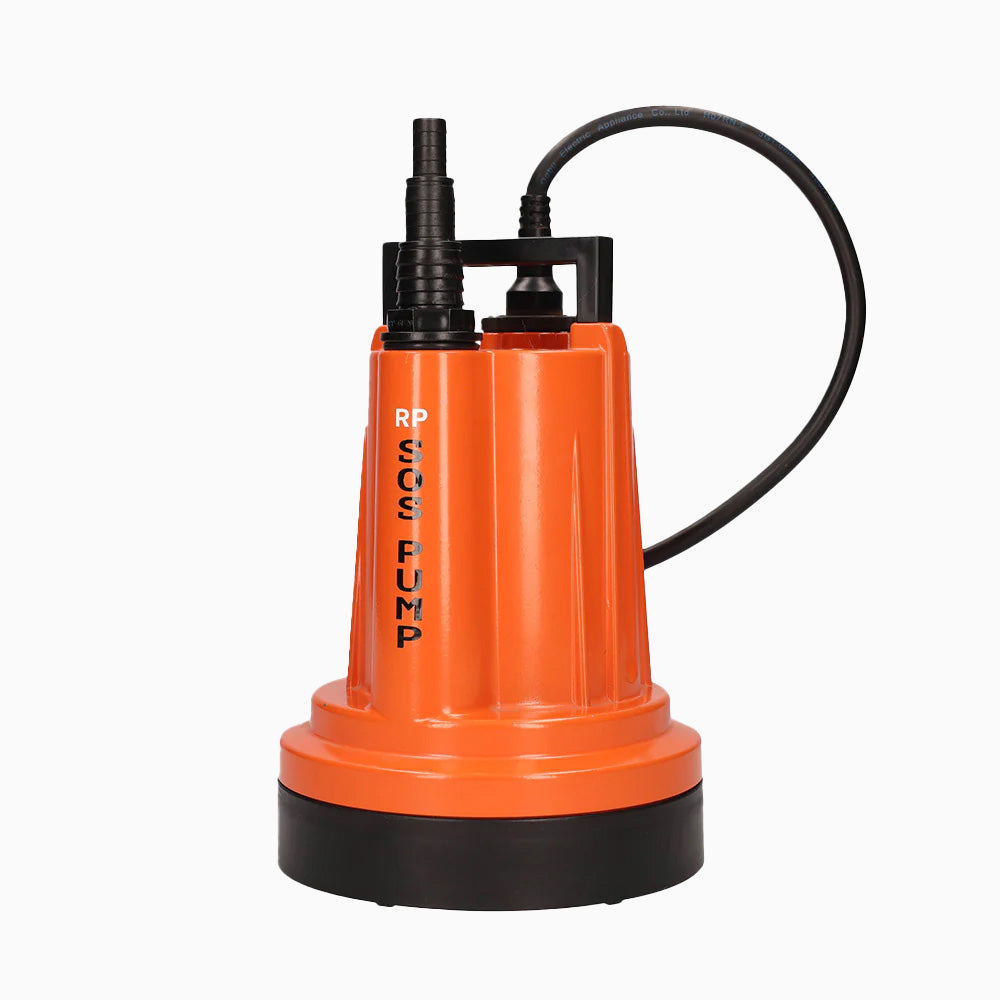
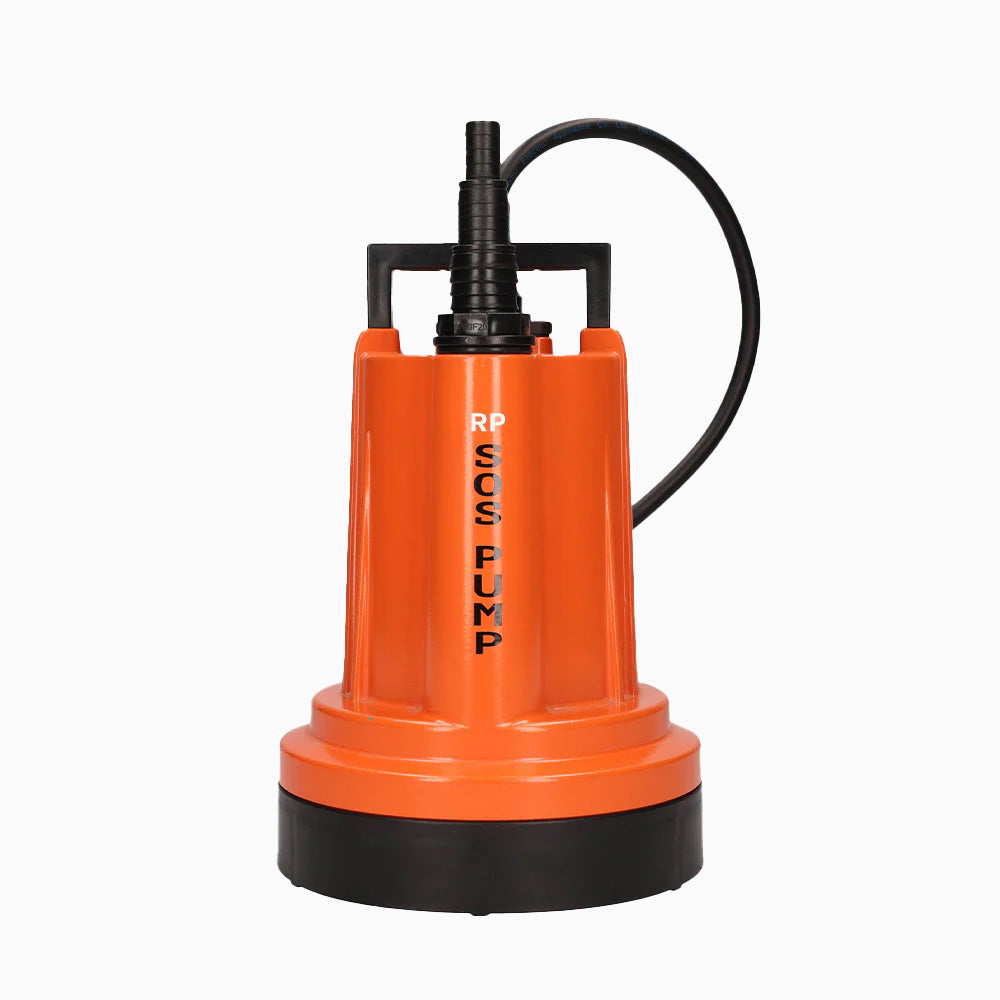
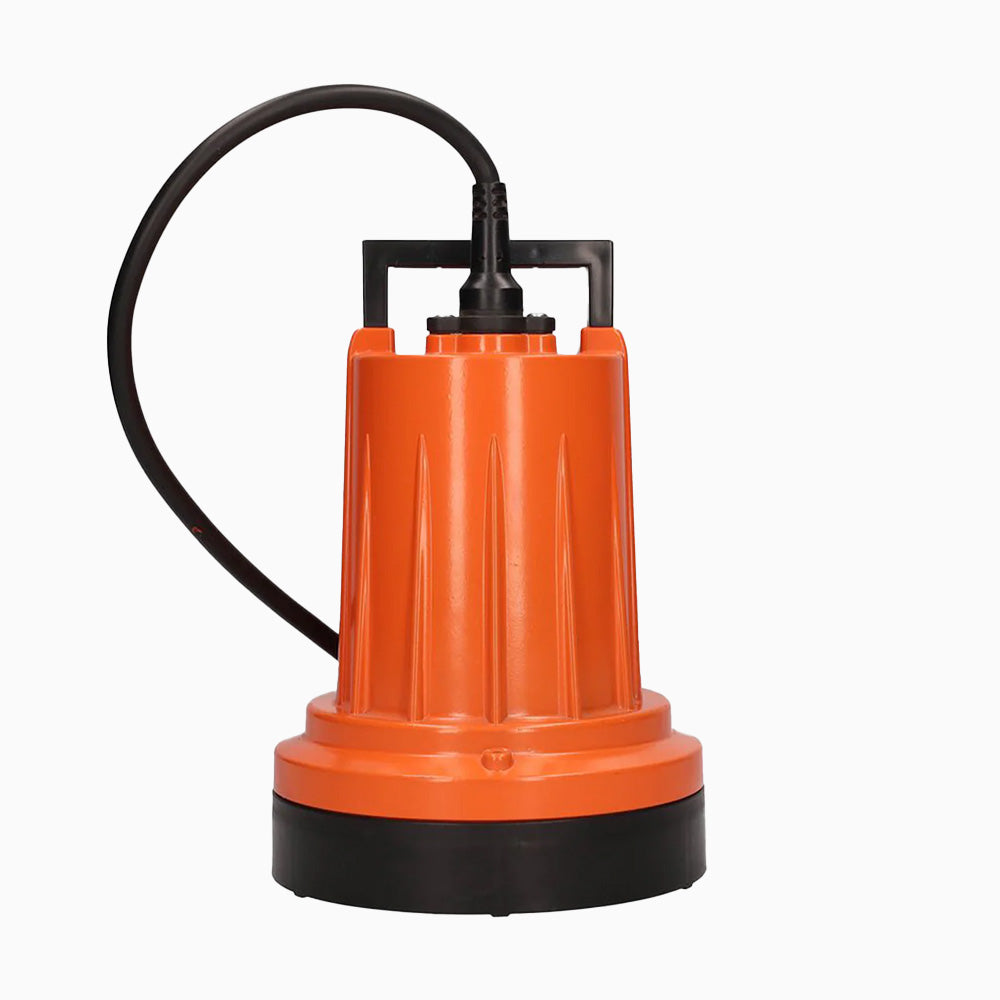
Submersible pump with water sensor 3mm
An internal float moves vertically within a protected tube, preventing it from getting stuck against a wall. Even more advanced are the electronic sensors. These detect water based on conductivity and have no external moving parts whatsoever.
Which choice suits your situation?
The choice depends entirely on where you will use the pump:
- Open spaces (flat roof, large basement): An external float valve is sufficient. See also Flat roof vacuum cleaner: Prevent damage from stagnant rainwater .
- Narrow wells or shafts: Always choose an internal float or an external sensor such as the Crab float.
- Mop-dry result: Please note that the pump has a flat suction base that can pump away up to 2 mm.

Submersible pump with switch 1mm
Installation and maintenance
Regardless of your choice, proper maintenance is essential. Dirt can block the float or clog the suction strainer. For practical tips, read "Maintaining and Installing a Flat Suction Pump" and "How to Clean the Impeller of a Flat Suction Pump After Use" to extend the life of your investment.
Frequently asked questions about float systems
Can I also manually operate a pump with an external float?
Yes, by holding the float up or securing it to the handle, the pump will continue to run. Be sure to turn the pump off manually once the water runs out to prevent dry running.
What is the advantage of an electronic sensor over a mechanical float?
An electronic sensor has no moving parts that can wear out or seize up due to limescale or dirt. Moreover, sensors can often switch much more precisely (from 1 or 3 mm).
Does a flat suction dredger with internal float fit in every pit?
Almost. Because the float doesn't swing outward, the pump only needs a diameter of about 20 to 25 centimeters to be free-standing.
Share:
Connecting the correct hose to your flat vacuum cleaner: Diameter and couplings
Flat suction dredgers for flooding and basement drainage