

Prevention is always better than cure, especially when it comes to the integrity of your home. In this guide, you'll learn how regular maintenance and smart preventative measures can minimize the risks of water on a flat roof.
The importance of prevention for water on a flat roof
A flat roof is an efficient construction, but it places high demands on drainage. When rainwater doesn't drain away immediately, stagnant water forms. While a small amount of water often doesn't pose an immediate danger, prolonged accumulation can lead to serious problems such as leaks, mold growth, and even structural damage to the roof structure. In our article "How much water can stand on a flat roof?" we delve deeper into the permitted margins, but the core message remains: a clean roof is a safe roof.
Effective prevention starts with understanding the weak points. Most water problems on flat roofs occur at the drains, the eaves, and the seams of the roof covering. By proactively checking these areas, you can save thousands of euros in repair costs in the long run.
Periodic maintenance: A step-by-step plan
To prevent flooding, a biannual inspection is essential. The best times for this are late autumn (after leaf fall) and early spring. During this inspection, perform the following steps:
1. Removal of organic material
Leaves, twigs, and moss pose the biggest threat to your drainage system. When this material rots, it forms a sludge layer that can completely block the drain. Use a soft broom to remove the debris. For a detailed approach, consult our Step-by-Step Guide: Cleaning Your Gutters and Downpipes Yourself .
2. Checking the drains and emergency overflows
Check that the city outlets and leaf traps are still clear. A clogged drain immediately causes the water level to rise. Don't forget the emergency drains either; they must be clear of obstructions to function properly during heavy rainfall. You can read more about this in The role of emergency overflows during extreme rainfall .
3. Inspection of the roof covering
Carefully inspect the bitumen or EPDM for blisters, cracks, or loose seams. Small defects can quickly develop into major leaks under the influence of standing water. See also "Consequences of water accumulation for roofing" for the specific risks of these types of damage.
Technical solutions for persistent problems
Sometimes regular maintenance isn't enough, for example, when there's a structural defect or a subsidence in the roof surface. In such cases, water still remains despite a clean drain. The article "Recognizing structural defects in a sloped flat roof" will help you determine if this is the case in your situation.
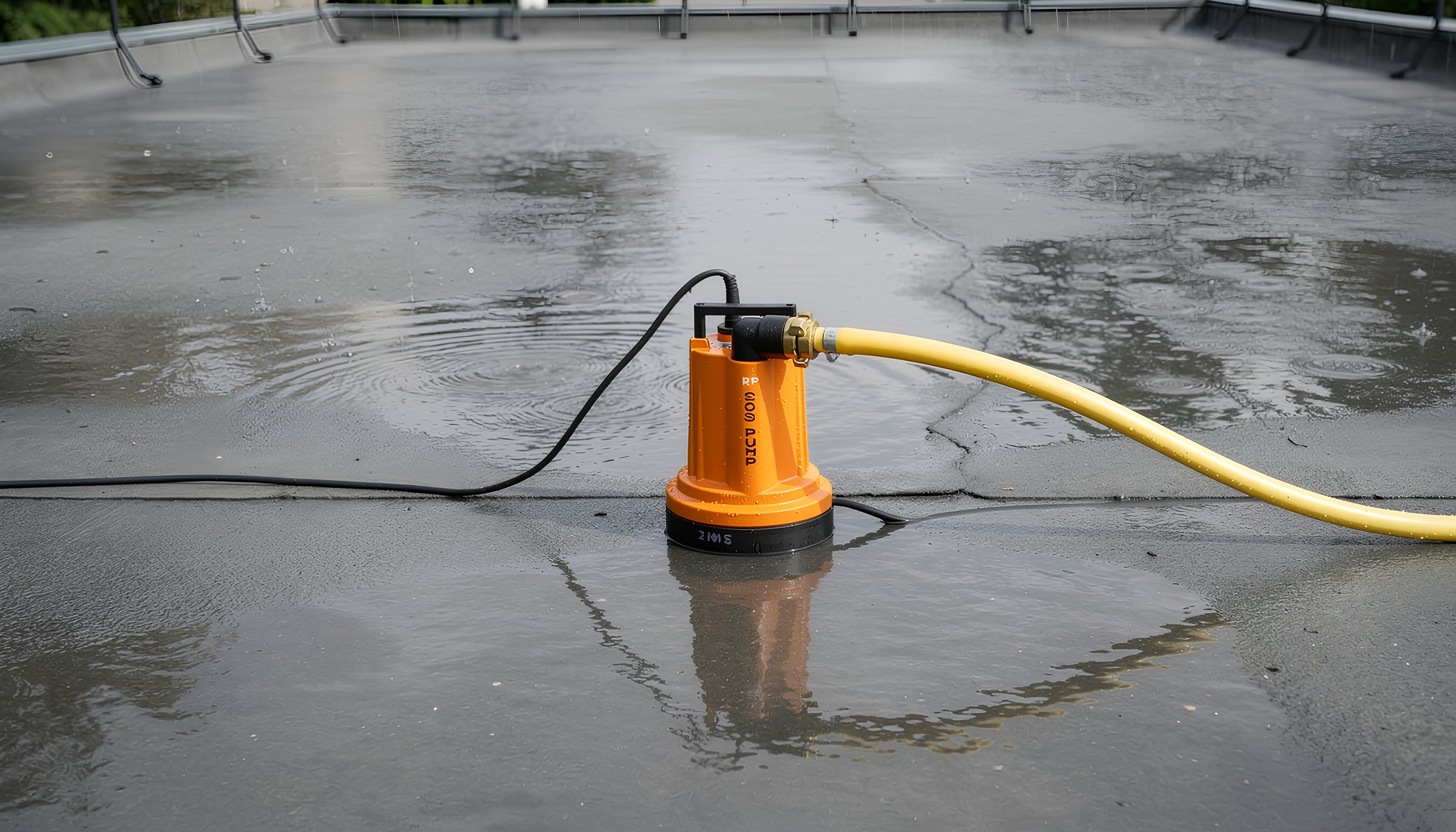
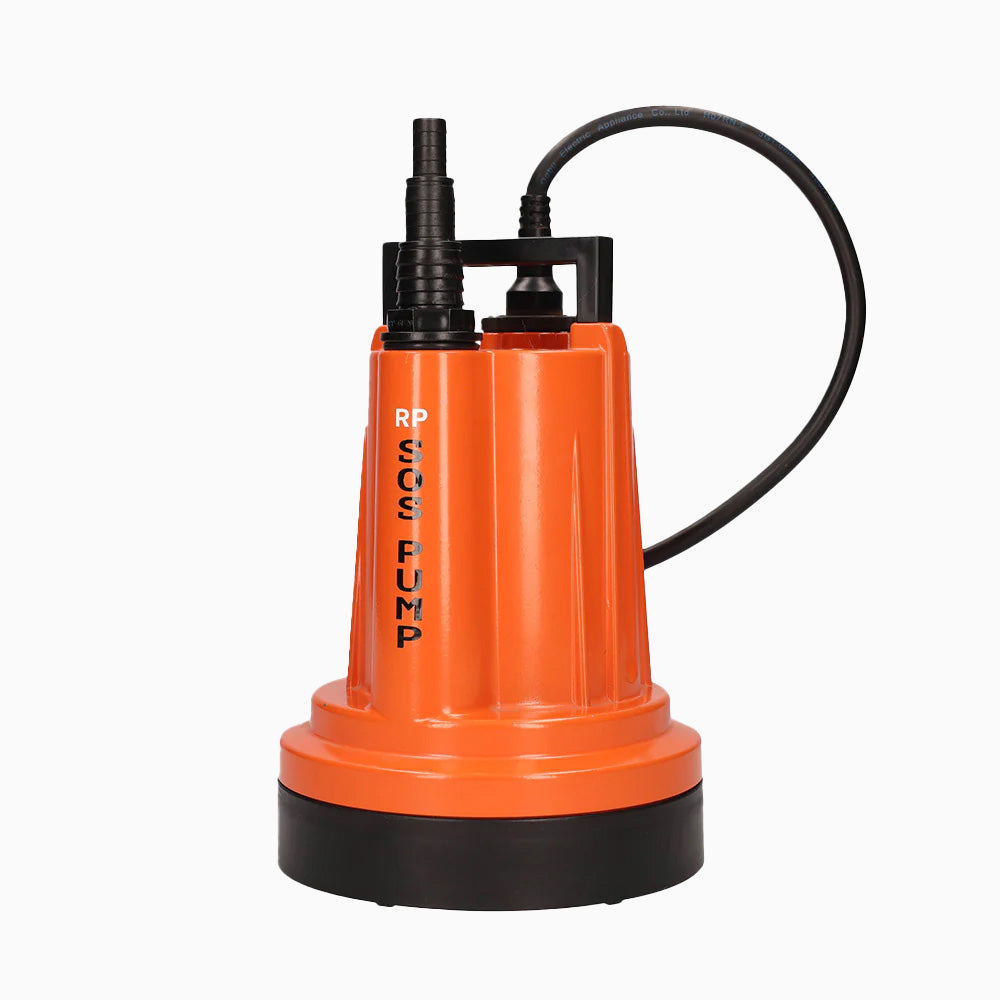
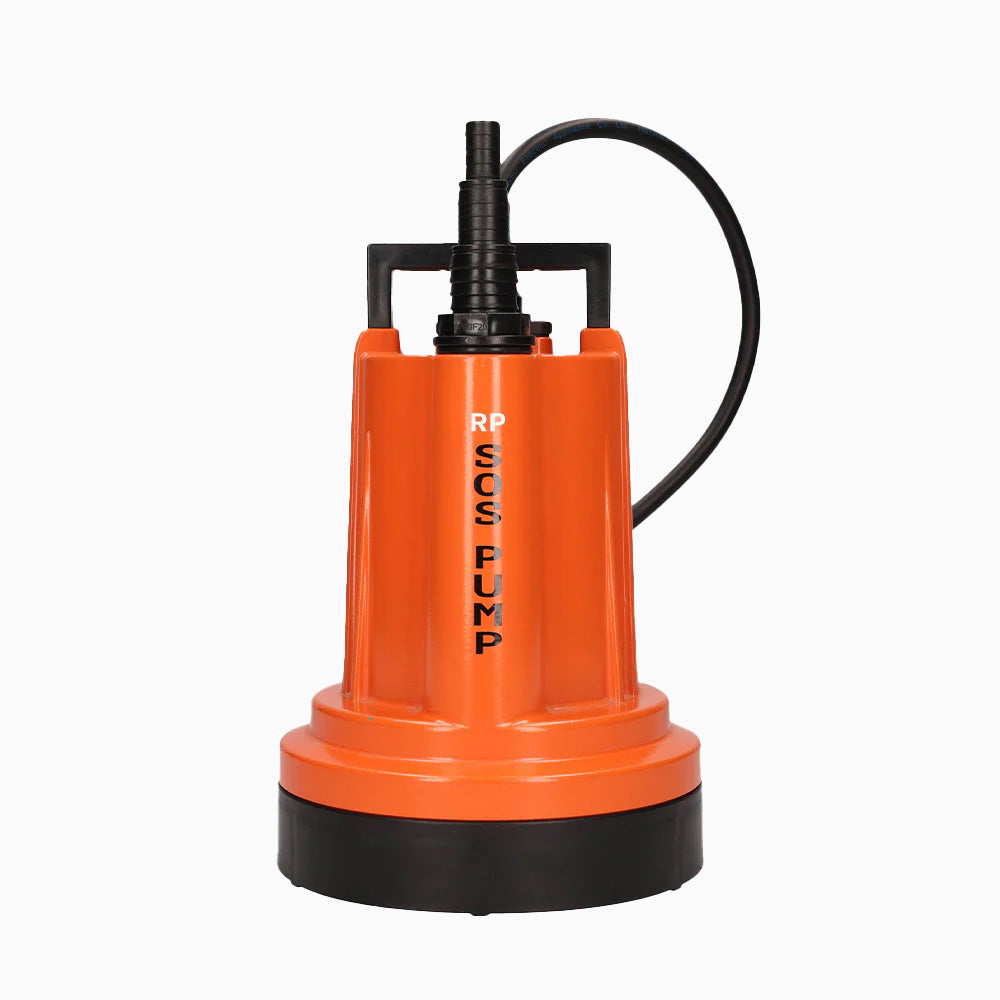
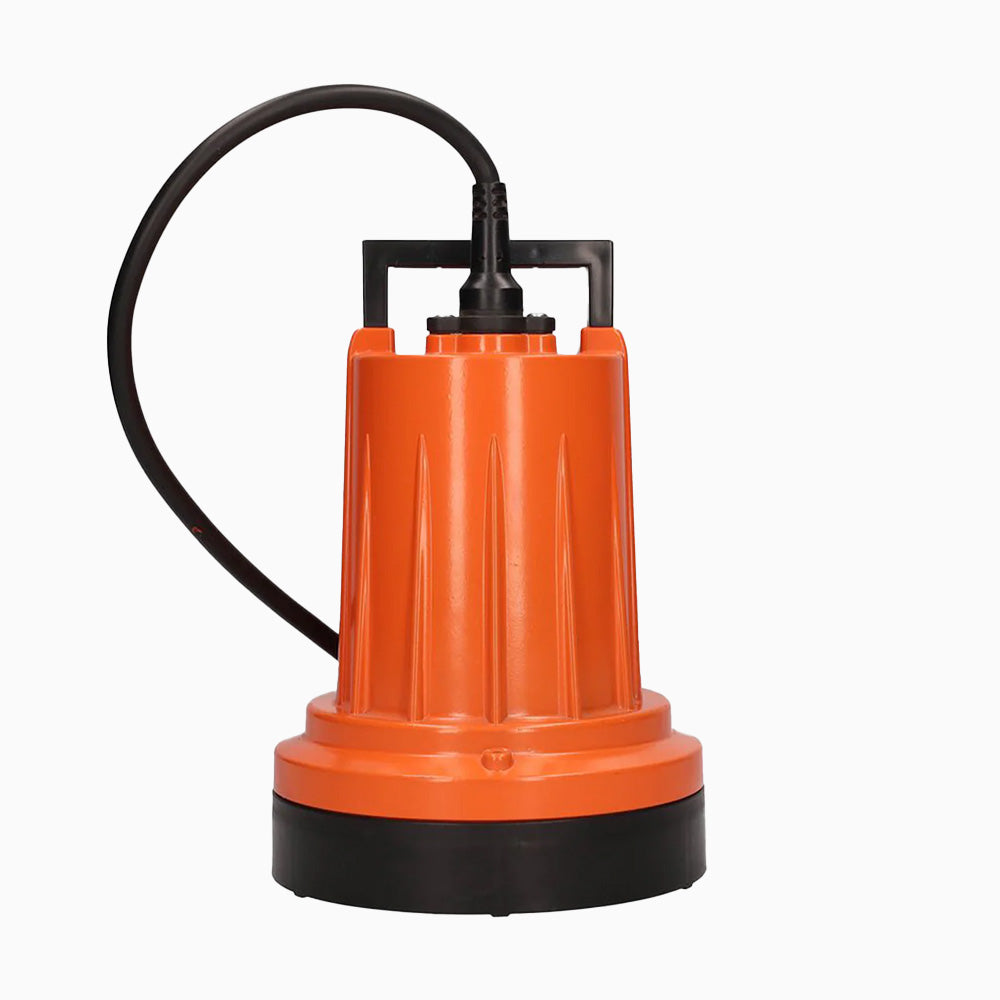
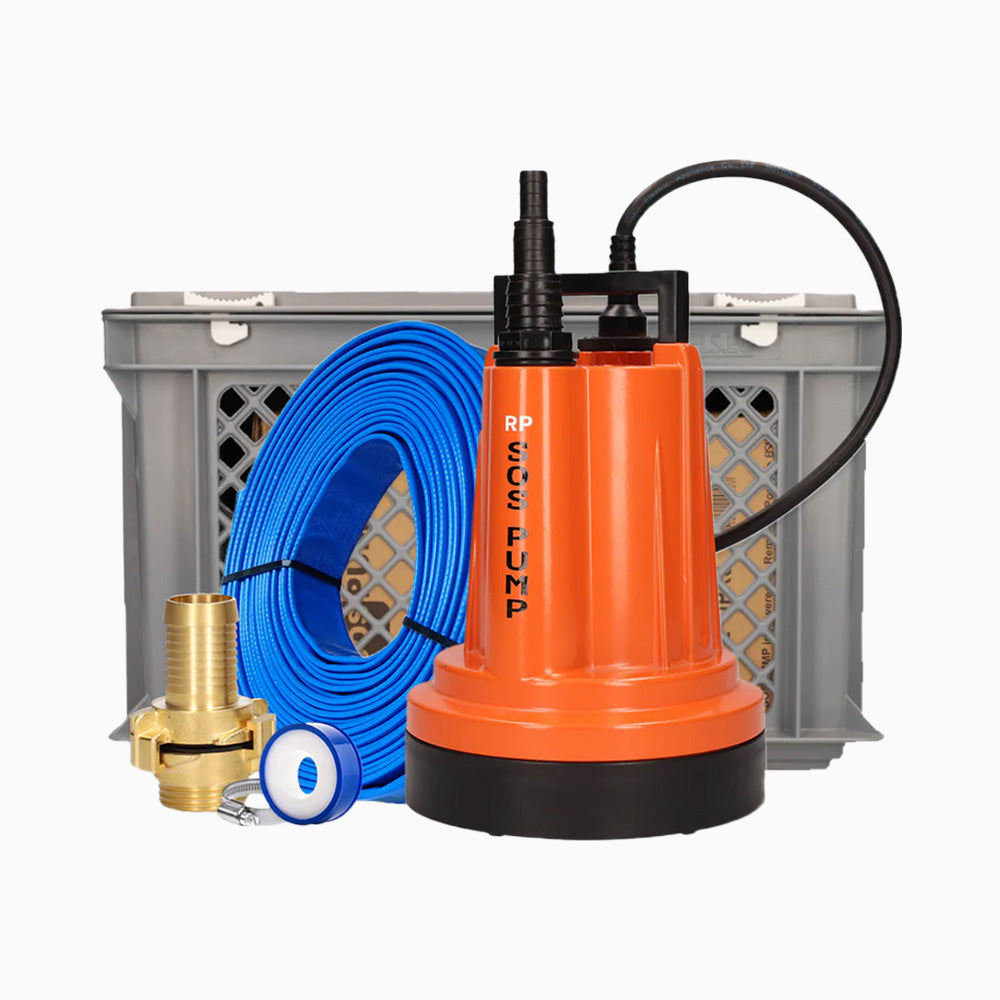
For roofs where water accumulates due to a lack of slope, an active solution is often the only way to prevent damage. A submersible pump with a flat suction can offer a solution. These pumps are specially designed to remove water down to a few millimeters, leaving the roof virtually dry.

Flat suction submersible pump
Automation of water drainage
Prevention only becomes truly worry-free when you automate it. Especially during holidays or periods of heavy rainfall, it's reassuring to know that excess water on a flat roof is drained away immediately, without you having to climb onto the roof yourself. By combining a submersible pump with an external sensor, you create a self-regulating system.
These sensors detect water even at a minimal depth (e.g., 1 or 3 mm) and activate the pump immediately. As soon as the roof is dry, the pump switches off again. This prevents water from penetrating the roof covering or placing excessive strain on the structure.

Crab Float Water Sensor 3mm
When to seek professional help?
While many maintenance tasks are easy to handle yourself, there are situations that require expertise. If you notice extensive loosening of the roof covering, or if there is structural sagging of the roof beams, it's time to call an expert. Read " When should you call a roofer for water on the roof?" to learn when you can handle the work yourself and when it's better to call a professional.
Good preparation is half the battle. Use our "Roof Inspection Checklist for Fall" to ensure you don't miss a single detail during your preventative inspection.
Frequently asked questions about maintenance and prevention
How often should I check my flat roof for water?
We recommend a thorough inspection at least twice a year: in the fall after leaf fall and in the spring. An additional check is also advisable after a heavy storm.
What's the best way to remove leaves from a flat roof?
Use a soft-bristled broom or a leaf blower. Avoid sharp tools like metal rakes, as they can damage the roofing.
Can I leave a submersible pump on my roof permanently?
Yes, provided the pump is installed in a frost-free location or brought indoors during the winter. Use a pump with an automatic sensor for best results in changing weather conditions.
Share:
How much water can remain on a flat roof?
Water on a flat roof: The complete guide to causes, risks and solutions