

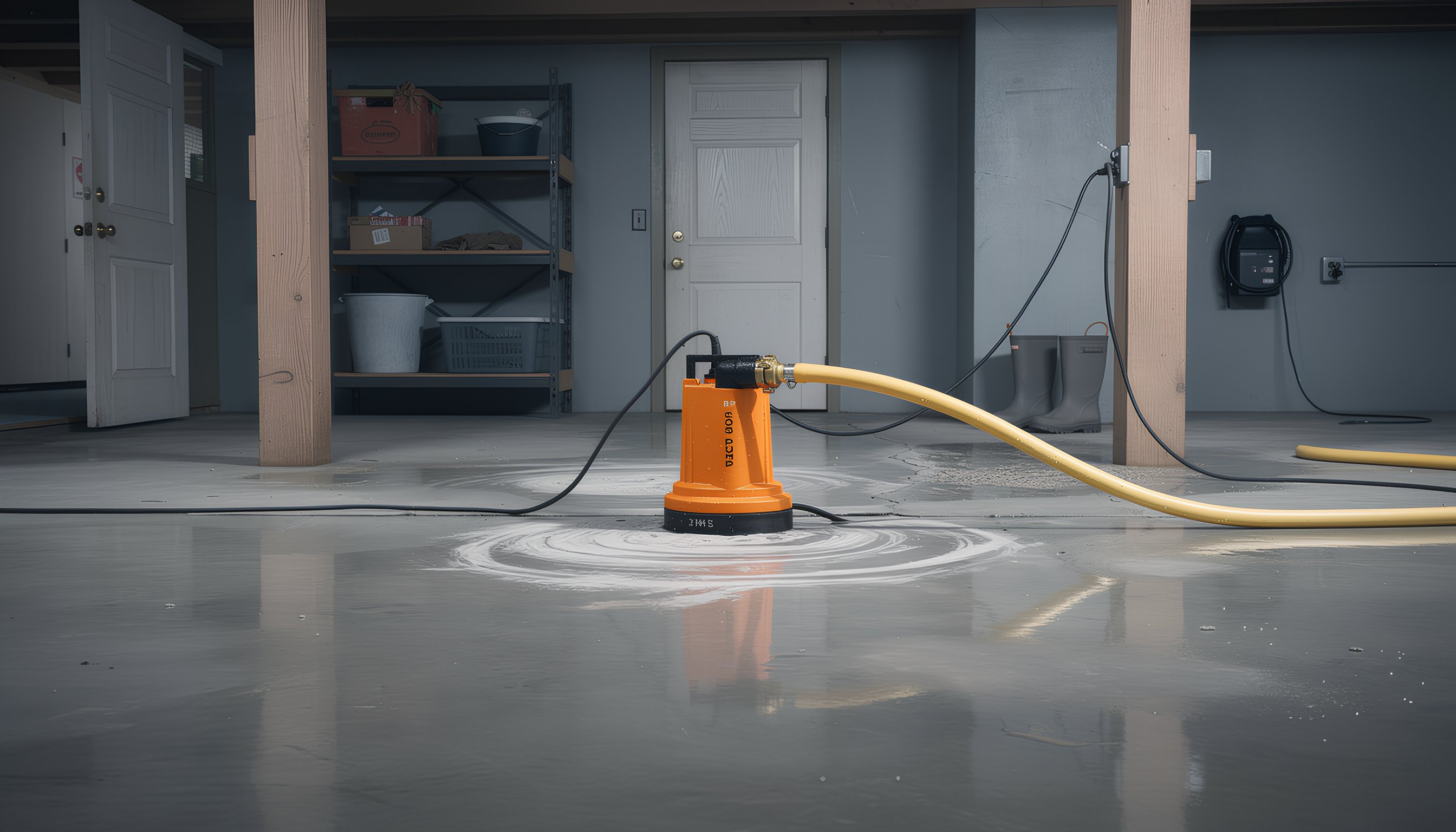
Are you choosing between a submersible pump with or without a float switch for your basement? Understanding automatic activation is crucial for preventing water damage and pumping efficiently.
What is a float and how does it work?
A float acts as the on/off switch for your basement pump based on the water level. When the water in the basement rises, the float floats upward. Once a certain point is reached, the float signals the pump to start. Once the water level drops, the float drops, and the pump automatically shuts off.
For many homeowners, a basement pump with a float switch is the default choice because it offers peace of mind; after all, you don't have to manually plug it in when it starts to rain. You can read more about this in All About Basement Pumps: The Ultimate Guide to a Dry Basement .
When do you choose a submersible pump with a float switch?
A float-operated pump is ideal for permanent installations in a sump. If your basement regularly experiences seepage or rainwater ingress, you'll want a system that operates independently. There are different types of floats:
- Float ball (cable float): A ball on a cable that needs space to float.
- Internal Float: A float that is built into the housing, ideal for narrow spaces.
- Electronic sensor: The most modern variant that detects water with millimeter precision.

Submersible pump with water sensor 3mm
The advantages of a float-free pump (manual)
A basement pump without a float switch, also called a manual pump, continues pumping as long as it's plugged in. This is especially useful in situations where you want to extract every last millimeter of water, often referred to as a flat suction pump. Because there's no float switch to prematurely shut off the pump, you can get the space completely dry.
The downside, however, is that you can never leave the pump unattended. If the pump runs dry (without water), the motor can burn out. This is fine for occasional jobs, but for permanent flooding, an automatic solution is safer. See also Choosing the Right Basement Pump: Types and Applications for a comparison of these models.
The hybrid solution: External sensors
Do you already have a powerful pump without a float switch, but still want it to operate automatically? Then you can opt for a separate level switch or water sensor. This offers the best of both worlds: the power of a flat suction pump and the ease of automation. This is often the best choice for very shallow basements where a traditional float ball wouldn't float.
In the article The best basement pumps for narrow wells and small spaces, we take a closer look at these specific configurations.

Electrode Level Switch 1mm
Frequently asked questions about basement pumps and floats
Can I retrofit a float to my pump?
Yes, there are separate float switches and electronic sensors available that you place between the socket and the pump to make a manual pump automatic.
What is the disadvantage of a float with a cable?
A cable float needs plenty of space (often a radius of 30-40 cm) to move freely. In narrow wells, the cable can become tangled, causing the pump to fail.
How low can a basement pump with sensor pump out water?
Modern flat vacuum cleaners with an electronic sensor can often remove water down to 1 or 2 mm of residual water, provided the sensor is set low enough.
Share:
Cost of a basement pump including installation in 2026
Installing and Maintaining Your Basement Pump: A Practical Guide