


Nothing is more frustrating than a garden hose that leaks more water from the faucet than comes out of the spray head. A leaky garden hose connector not only causes wet feet but also wastes unnecessary water during watering.
Why is my garden hose connector leaking?
A leak at your garden hose connector is usually caused by worn seals. The most common culprit is the O-ring: the small rubber ring that creates an airtight and watertight seal. Exposure to UV rays, limescale in the water, and temperature fluctuations can cause this rubber to dry out, crack, or simply become flattened. An incorrectly sized connector or a damaged hose tail can also cause a constant drip.
Step-by-step plan: Replacing the O-ring
Fixing a leaky connection is a piece of cake if you know where to look. Follow these steps to make your system 100% watertight again:
- Inspection: Disconnect the hose from the faucet or sprayer. Check the female connector or male plug. If you see any cracks in the rubber, it needs to be replaced.
- Removal: Use a small flathead screwdriver to gently pry off the old O-ring. Be careful not to damage the plastic or metal housing of the fitting.
- Cleaning: Clean the groove where the ring was located with a cloth. Limescale residue can prevent a new ring from fitting properly.
- Install: Press the new O-ring firmly into place. A drop of dish soap can help the ring slide smoothly over the rim.

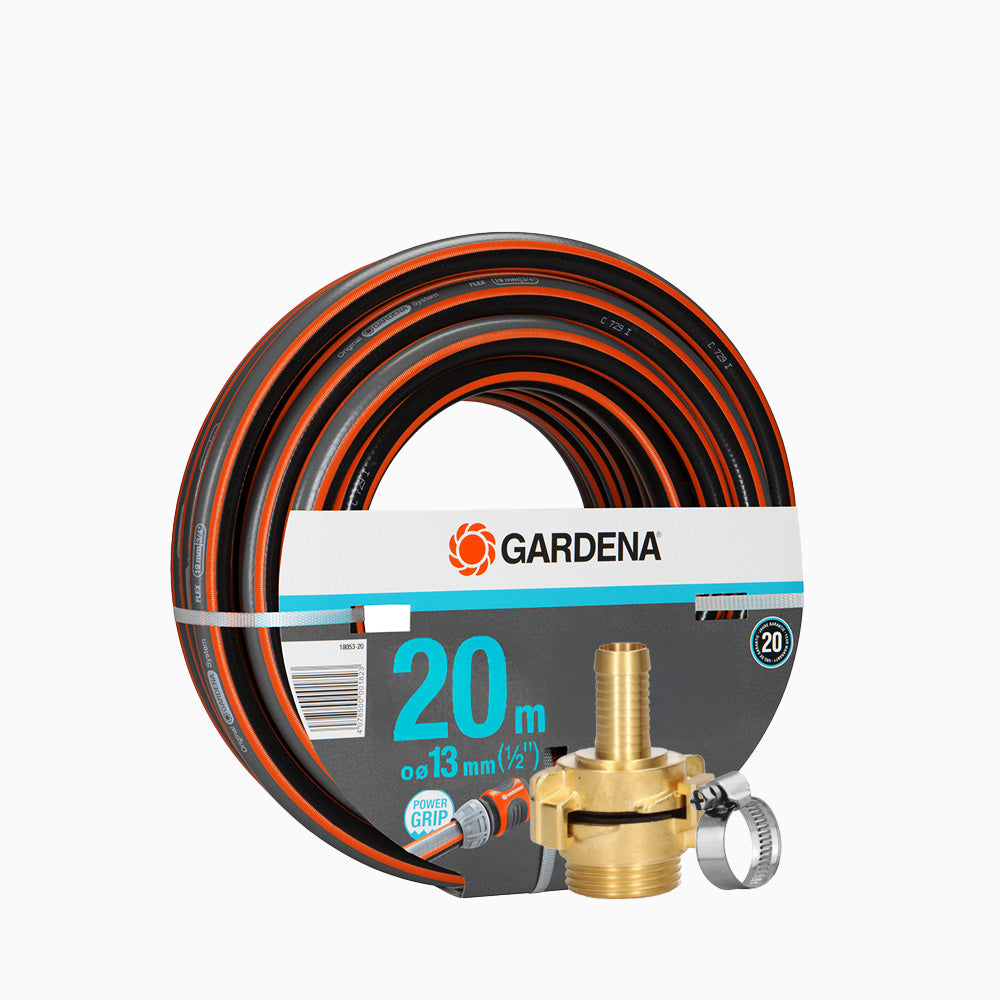
Quick Coupling Set 13mm
Restore threads and seals
Sometimes the leak isn't in the click connection, but in the threads on the faucet. If the fitting continues to leak here, the internal flat washer is often worn. Is the thread itself slightly damaged? Then Teflon tape can help. Wrap the tape clockwise around the faucet threads three to five times before screwing the tap connector back on. This fills in the smallest imperfections and stops the leak immediately.
For optimal flow, it's also important that the diameter of your couplings matches your hose. Read more about this in " Buying a garden hose: What should you consider regarding diameter and bar? "
Prevention is better than cure
To prevent future leaks in your "garden hose," proper maintenance is essential. Always neatly roll up the hose after use. In our article "Storing and Maintaining Your Garden Hose," we explain how to prevent kinks that unnecessarily increase pressure on the couplings. Also, don't forget to remove the couplings in the fall; freezing water in the coupling can crack the plastic.

Teflon Tape
Frequently Asked Questions about Garden Hose Repair
What size O-ring do I need for my garden hose?
Most standard garden hose connectors (such as the Gardena system) use a standard size O-ring. For 13mm (1/2") and 19mm (3/4") connectors, the plug nipple is often identical, making the rings universally interchangeable.
Can I use Vaseline on the rubbers?
Yes, a tiny bit of acid-free Vaseline or silicone grease keeps the rubber supple and makes the coupling engage and disengage more easily. Avoid oil-based greases, as these can damage the rubber.
My coupling keeps coming loose from the hose, what now?
This often indicates excessive water pressure or a worn clamp ring in the coupling. Check that the hose is pushed far enough into the coupling and tighten the union nut firmly. If this doesn't help, the coupling needs to be replaced.
Share:
Preventing kinks in the garden hose: Tips and tricks for a free water flow
Types of Garden Hoses: Which One Is Right for Your Garden?